t. 845-278-6738
f. 845-278-6761
e. putnam@cornell.edu
w. cceputnamcounty.org
Cornell Cooperative Extension
Putnam County

Fireflies: Sparks in the Dark
by Jill Eisenstein, Master Gardener Volunteer
One warm, humid night in June, the tall grass near the garden twinkles. One little flash…then another… then another… and my summer begins. The fireflies have returned.
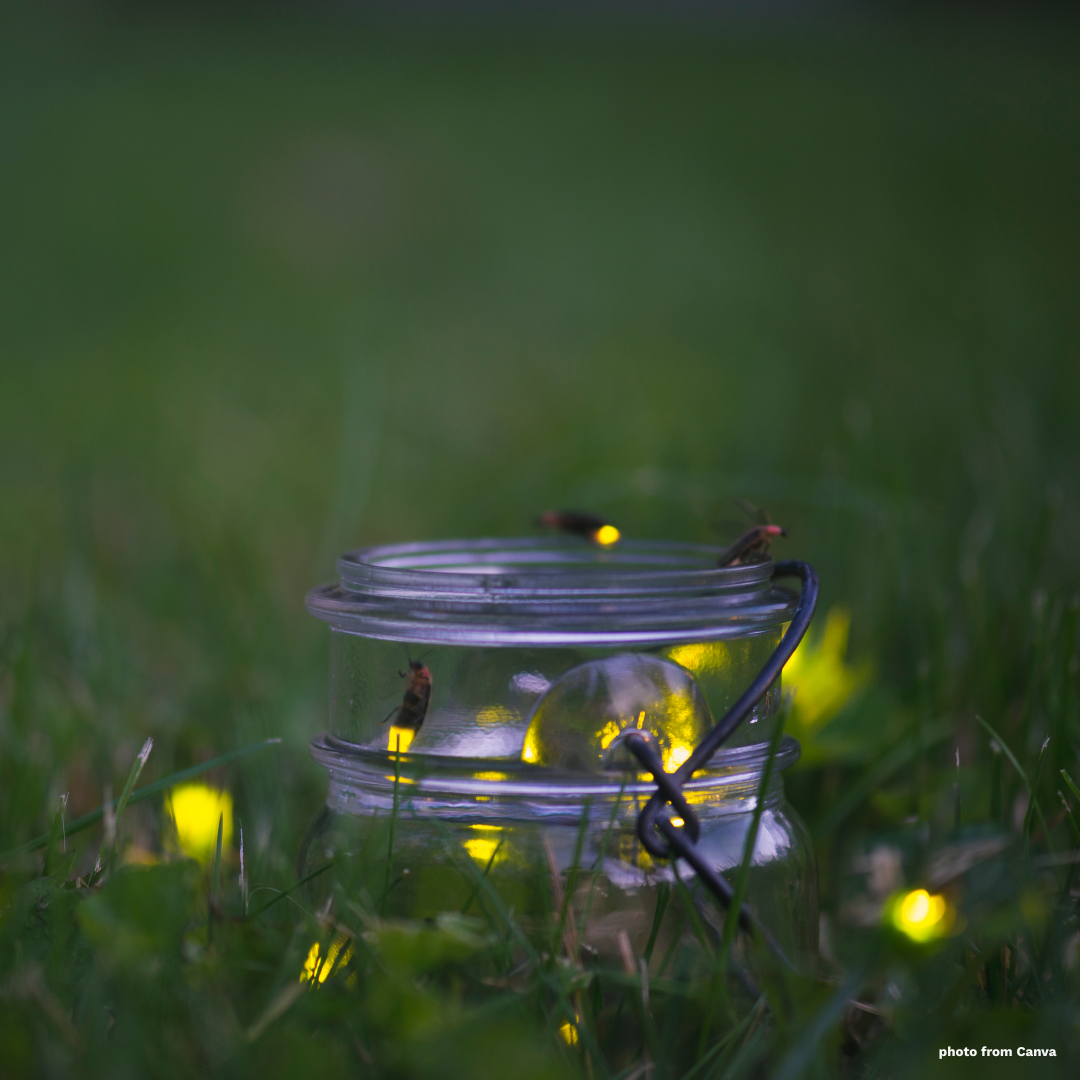
As a child, I remember catching these harmless insects in glass jars with my big sister. We would put the lid on, which had been carefully punctured with air holes, and pretend we had a special lantern for a few hours before we let them go.
Despite their name, fireflies, also known as lightning bugs, are neither flies nor bugs. They are beetles in the family Lampyridae, which means “shining fire.” They got the moniker “fireflies” because of their bioluminescence; they carry tiny chemistry labs in their lower abdomen with vials of luciferase and luciferin. Luciferase is an enzyme that triggers the emission of light, and luciferin produces light, but no heat.
They use their special chemistry reactions for courtship. The male sends a flash of light into the air, and a female, waiting near the ground, responds with another flash if she is interested. Each firefly species has its own flash pattern.
Intriguing, mysterious as the twinkling stars, the most common species in the Hudson Valley is even named after a well-known asterism: Photinus pyralis, the common eastern firefly, is called the “Big Dipper” firefly because of the males’ dipper-shaped flight.
Nature often saves its most resplendent for the end (think fall foliage, swan songs), and so the fireflies. The luminaries only live for a few weeks. They mate, lay eggs in the ground, leaf litter or other moist location… and disappear forever. But in their young years, laud them, they were helping us with pest control: they spent two or more years as larvae, dining on worms, snails, slugs and other small critters in the soil.
Sadly, our little sparks in the dark are losing ground. The shimmering light show that has captivated our hearts for many years is being slowly but perceptively extinguished by habitat loss, light pollution, and the use of chemical pesticides.
Here are several ways to increase the probability of seeing fireflies in summer: turn off outside lights at night; leave leaf litter under trees for the larvae to grow up in; leave some edges of taller plants or grass unmown; and avoid using pesticides and chemical fertilizers.
Resources:
https://extension.illinois.edu/blogs/good-growing/...
https://bugs.uconn.edu/2021/07/30/fireflies/
https://www.fireflyatlas.org/
https://www.nwf.org/Educational-Resources/Wildlife-Guide/Invertebrates/Fireflies
https://www.newyorkalmanack.com/2023/06/its-firefly-season-increasingly-rare-lightning-bugs/