Happenings February 2026

February 2026
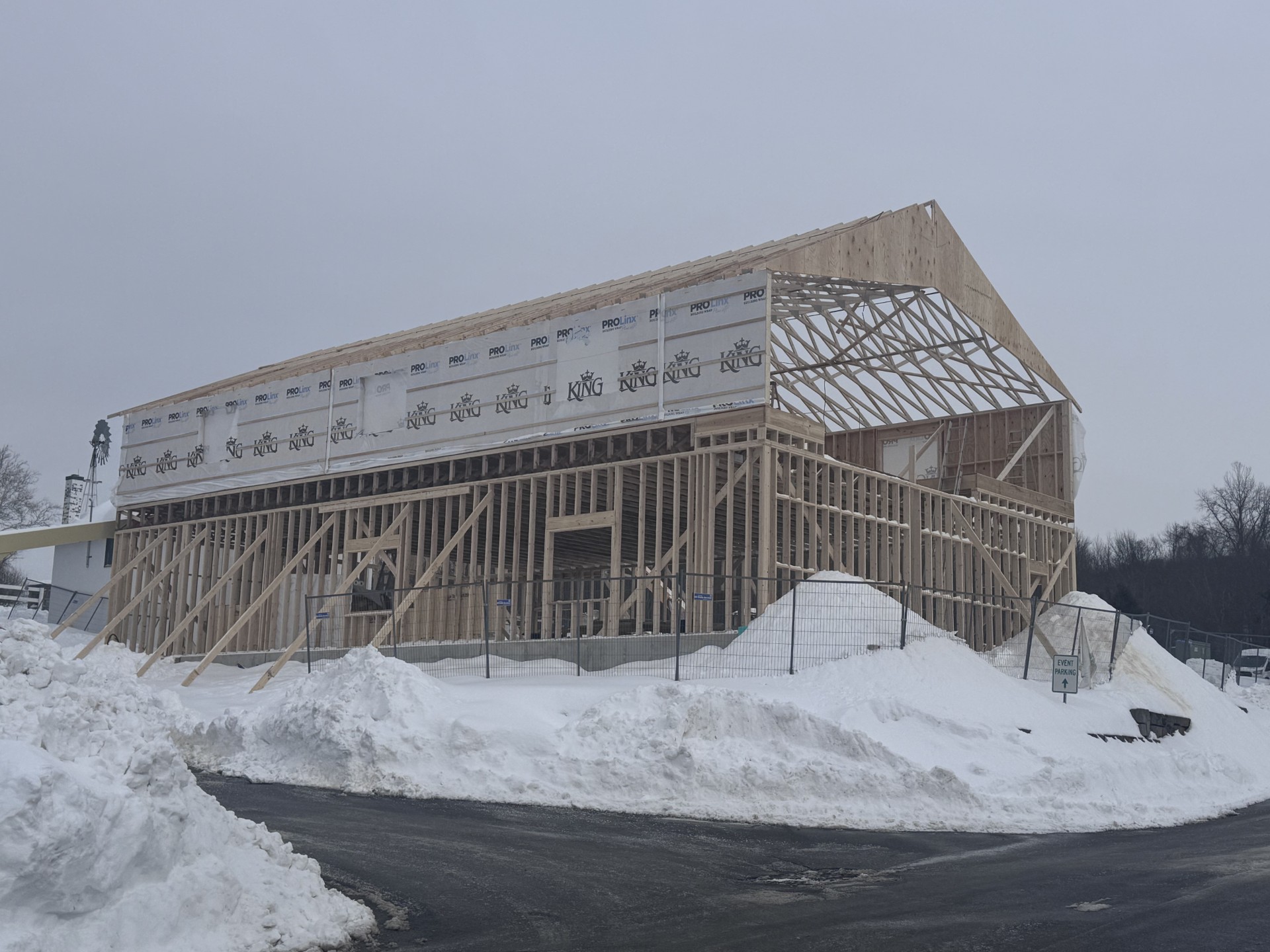
The Cornell Barn and Education Center: A Vision Coming to Life
Construction at Tilly Foster Farm is moving fast, but we still need funding to complete the building which will provide:
- Expanded classrooms and horticulture lab
- State-of-the-art agricultural and environmental education spaces
- Workforce development training
- Flexible rooms for community workshops, volunteers, and public programs
- A home that finally matches the scale and impact of our mission
We cannot afford to slow down — not when youth, families, farmers, educators, and the entire community are counting on this space. We must close the final funding gap now to keep the Cornell Barn on schedule and fully equipped for opening day. Without immediate support, we risk delays and rising costs. With your help, we cross the finish line.
Your gift will prevent construction delays; ensure classrooms and labs are fully equipped; and strengthen youth, agriculture and community programs.
Please make your tax-deductible gift today: CCE Putnam County, 1 Geneva Road, Brewster, NY 10509
Ways to Give
Online: Visit our donation page and be a part of the difference we are striving to create.
By Check: Checks should be made payable to Cornell Cooperative Extension Putnam County and mailed to our office at 1 Geneva Road, Brewster, NY 10509.
Groundhogs: The Pudgy Pest of Growers Everywhere
by Rachael Paradise, Communications Coordinator
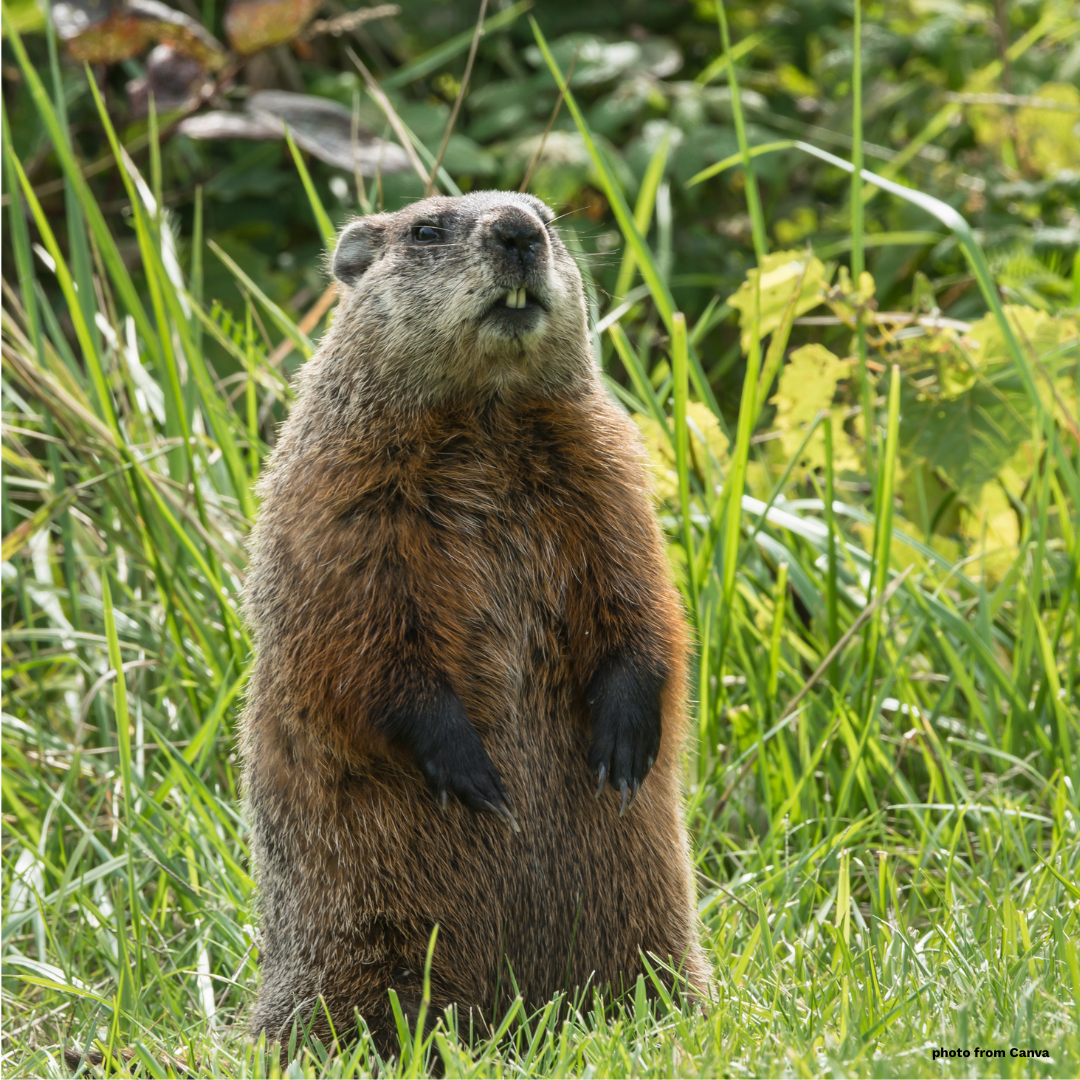
Let’s be honest: Whether Punxsutawney Phil sees his shadow or not, if you live where there are groundhogs, and you have a garden (or even a patch of luscious lawn), chances are you’ll be contending (nay, competing) with one of his brethren in the very near future! Marmota monax —cute, chunky and a voracious consumer of vegetation with a side of pecuniary loss.
The groundhog (AKA woodchuck, whistle-pig, land beaver or, if you’re French Canadian, siffleux) is part of the rodent family and belongs to the group of large ground squirrels known as marmots. One may be led to believe groundhogs spend all their time on the ground—or burrowing under it— but they are pretty good climbers and can be seen in lower tree branches as well as grassy meadows.
What’s on the Groundhog’s Plate?
Strict herbivores, groundhogs feed on a variety of vegetables, grasses and legumes. Their preferred diet includes garden vegetables like beans, peas, carrots and berries as well as alfalfa, clover and various grasses.
Where Does the Groundhog Live?
Here in the Northeast, groundhogs have adapted to life in urban neighborhoods, the ‘burbs and rural areas. They can be found in yards, fields, meadows and woodland clearings. They also frequent grassy areas along roadways.
Groundhogs are built for digging and dig they do! According to Mass Audubon, groundhogs “dig extensive burrows 2 to 6 feet deep and up to 50 feet long that contain numerous chambers with specific functions, such as for nesting or waste. Main entrances can be spotted by an adjacent mound of fresh dirt, which these animals use for observation and sun-basking. In addition, there may be as many as five other openings to the den.”
Conflicts with Human
We’ve established what groundhogs eat and where they live and herein lies the root of the problem—their lifestyle often conflicts with ours.
Groundhogs can cause damage on farms, in home gardens, orchards and nurseries and around buildings, according to Penn State Extension. The destruction of crops can be costly and extensive for farmers and home gardeners alike. In addition, groundhogs are rodents that need to chew to keep their teeth trimmed, fruit trees and woody vegetation can be harmed by their gnawing. The holes they dig are hazards to farm equipment, animals and people. If they dig near a building or under a patio, they can cause structural damage and weaken foundations.
An Ounce of Prevention
In New York State, it is legal to “take” a groundhog for being a nuisance and/or damaging property, according to the NYS Department of Environmental Conservation (DEC). “Take” simply means "to pursue, shoot, hunt, kill, capture, trap, snare or net wildlife; or perform acts that disturb or worry wildlife." Taking an animal is only suggested if other best practices do not alleviate the problem.
A recommendation from the DEC is in the form of the acronym REPEL. For groundhogs:
Remove food sources
- Use fencing to cover gardens and plants
- Pick up dropped fruit on the ground
- Use landscaping plants that do not attract problem animals
Eliminate cover and shelter
- Mow grass surrounding vegetable garden and near houses or other buildings.
Put up barriers
- Fence in areas such as gardens and underneath decks
- Seal entry holes that lead into the house. Ensure there are no animals inside as this can lead to worse problems.
Excite or agitate
- Use visual repellents such as scarecrows or lights
- Create noise (i.e. yelling, noisemakers) - be sure to check noise ordinances in your area
- Haze (i.e. chase away with dogs, remote control cars and planes, etc.).
Legally remove or “take”
- Contact a Nuisance Wildlife Control Operator (NWCO) - hire a professional to remove problem wildlife from your property.
- Remove or "take" nuisance animals on your own in accordance with New York State laws and regulations.
Remember, if you do decide to live trap a groundhog, you can’t just let it go on someone else’s land (public or private). It is illegal for you to move or relocate an animal off your property. Relocating an animal can create problems for neighbors, can move diseases like rabies or Lyme, and can cause unnecessary stress to the animal. This task must be handled by a licensed NWCO professional.
Fence Them Out
As many people discover, removing one groundhog (or even a whole family) generally means a new family will soon move in. A more permanent control method is fencing, if practical. According to Penn State Extension:
- Fences should be at least 3 feet high and made of heavy poultry wire or 2-inch woven mesh wire. (If you are also managing for deer, make fencing 8’ for good measure).
- To prevent groundhogs from burrowing under the fence, bury the lower edge 12 inches in the ground with the lower 6 inches bent at an L-shaped angle leading outward.
- Fences should extend 3 to 4 feet above the ground.
- As an additional measure, place an electric wire 4 to 5 inches off the ground and the same distance outside the fence. When connected to a fence charger, the electric wire will prevent climbing and burrowing. In some instances, a single electric wire placed 4 to 5 inches above the ground has deterred groundhogs from entering gardens. Vegetation in the vicinity of any electric fence should be removed regularly to prevent the system from shorting out.
- Bending the top 15 inches of wire fence outward at a 45-degree angle will also prevent groundhogs from climbing over the fence.
Fencing is best for protecting home gardens and also keeps rabbits, dogs, cats and other animals out.
On the Plus Side
Very often, the dens of groundhogs provide homes for other animals, including skunks and red fox that feed on mice, grasshoppers, beetles and other creatures that destroy crops. In aiding these animals, the groundhog indirectly helps the farmer. In addition to providing homes for itself and other animals, the groundhog aids in soil improvement by bringing subsoil to the surface.
“Modifying habitat in and around homes and gardens can help deter woodchucks and can increase the effectiveness of other control techniques. Eliminating brush piles and overgrown areas reduces the amount of food and cover available, making an area less attractive to woodchucks. Unfortunately, elimination of these areas may also remove valuable habitat for other wildlife,” according to Cornell Cooperative Extension Wildlife Damage Management Program’s woodchuck fact sheet.
Adding Humor to the Situation
In 1883, the New Hampshire Legislative Woodchuck Committee was formed to address the nuisance of groundhogs damaging farms. Led by Rep. Charles Corning, it formally issued a published report that was both humorous and scathing, condemning groundhogs as, "not only a nuisance, but also a bore."
As reported in the San Luis Obispo (Calif.) Morning Tribune, Dec. 1, 1883: The woodchuck "possesses some of the amenities of a higher civilization. It cleans its face after the manner of the squirrel and licks its fur after the manner of the cat. Your committee is too wise, however, to be deceived by this purely superficial observance of better habits. Contemporaneous with the ark, the woodchuck has not made any material progress in social science, and it is now too late to attempt to reform the wayward sinner.”
Of the groundhog's hibernation they stated, “The animal, so they say, takes its bed about October 1, and becomes torpid and to all appearances dead. Unfortunately, for the farmers, this interesting habit only goes into effect at that season of the year when nobody cares a snap about the woodchuck or the clover crop.”
While the committee and its report were satirical in tone, they addressed a real agricultural concern for 19th-century New Hampshire farmers, recommending a bounty for each groundhog dispatched. The bounty was authorized in September 1883 and reportedly resulted in over 122,000 groundhog tails being turned in over a six-month period at 10 cents a tail. This, apparently, nearly caused a state budget crisis! The bounty was repealed in 1885.
Wildlife Boxes Offer Prime Real Estate for Nesting Birds
adapted by Rachael Paradise, Communications Coordinator, from articles by Cornell Lab of Ornithology and Robert A. Pierce II, University of Missouri Extension
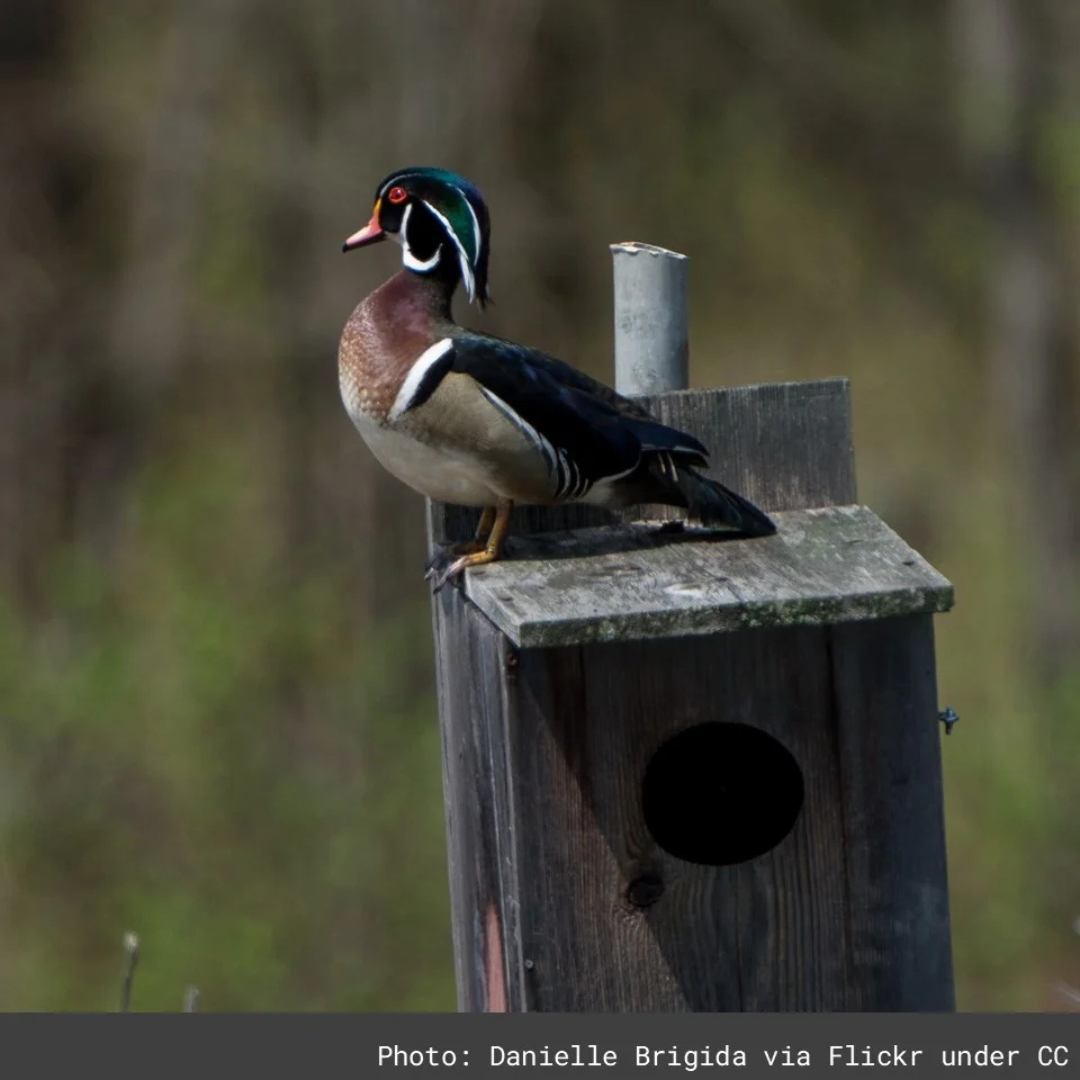
Making your yard inviting to different bird species is a great way to enjoy and enhance bird watching. Identifying food, water and space are important factors in attracting birds. Suitable cover like wildlife boxes constructed for specific species will also help bring birds to your backyard oasis!
During our Seedling Sale in February, CCE Putnam and Putnam Soil and Water Conservation District will be selling wildlife boxes for house wrens, owls, hawks, Eastern bluebirds, bats and wood ducks. Online ordering opens Feb. 17. You will find the link on our website events page then!
It’s All in the Build
Suitable cover is often one of the most limited habitat components on a farm or in a residential area, according to University of Missouri Extension. While many birds nest in tree cavities, providing nest boxes while waiting for trees to mature can make these environments more habitable for cavity-nesting wildlife. Some wildlife species, including Eastern bluebirds and wood ducks, have benefited from the increased use of nest boxes. Although wildlife or nest boxes are not a replacement for the habitat provided by hardwoods and other tree species, they can be used as a wildlife habitat management practice to supplement natural cavities and thus enhance a property's attractiveness to cavity-nesting species, while complementing the landscape design.
Each wildlife species has preferences for the type and location of its nest cavity, some of which will overlap among species. Wildlife box plans and designs for most cavity-nesting wildlife species are available from a variety of sources. The appearance of boxes may vary considerably, but their basic function remains the same: to attract the wildlife species of interest to your property.
A properly maintained nest box can last for years. To maximize its value, youy must install a box with the correct specifications for the desired species, and install it at the proper height and in the proper location—near food, water and other cover needed by the desired species.
University of Missouri Extension reminds homeowners to erect nest boxes well before the average start of the nesting season because some species set up a nesting territory three to four weeks before laying eggs.
Discouraging Predators
Although nest boxes provide nesting opportunities for many native birds, they also can make easy targets for predators, according to Cornell Lab of Ornithology. Common predators of nests in nest boxes include raccoons, cats, snakes and squirrels.
To keep cats and raccoons out of nest boxes:
- Install a roof that extends five inches beyond the front of the box will prevent these animals from easily reaching into the entrance hole from above.
- Mount your box high enough and away from trees so cats cannot spring to the top of the box in a single leap.
- Attach predator guards to your boxes to prevent these animals from climbing up from below. Three commonly used guards are shown below.
- Keep pet cats indoors.
- Do not feed feral cats. This will encourage them to stay in the area.
- Avoid leaving out pet food or bird seed that can attract predators to an area.
Snakes are occasional predators of eggs and nestlings. A conical metal collar mounted below the box will prevent most snakes from climbing up from below. Pole-mounted nest boxes should be placed away from trees to prevent snakes from accessing them from overhead branches. If your box is mounted to a tree or utility pole, use an acetate sheet wrapped around the trunk or pole.
Squirrels can also damage nest boxes. By chewing at entrance holes to enlarge them, they make it easier for themselves and other predators to enter. To curb this, cut a hole the same size as the nest box entrance hole in a rectangular piece of sheet metal and attach it to the front of the nest box so that both holes line up.
It’s important to remember that native predators can also benefit birds; for example, a ratsnake may consume only a few birds’ nests a year but will also consume many more rodents, which play a large role in nest predation, according to Cornell Lab of Ornithology. Some birds even selectively nest near predators because it affords them some protection against other smaller predators (this is called a protective nesting association). Additionally, state laws typically protect native mammals and snakes, and permits are needed to cull them (translocating wildlife is generally not recommended due to the risk of spreading disease).
Maintenance
Both Cornell Lab of Ornithology and University of Missouri Extension recommend cleaning out a nest box at the end of the season by removing nesting material and scrubbing the interior of the box. If the nest box is soiled with fecal matter, you can clean it with a solution of one part bleach to 10 parts water. Some people opt to clean a nest box out after every brood, but it’s imperative that this is done when there is absolutely no sign of breeding activity in the box; if you’re unsure whether the box is being actively used, it’s best to leave it alone.
You can leave your box up over the winter and allow it to be used as a roosting place for birds that don’t migrate, mice or squirrels or, if you prefer, you can seal off birdhouses to prevent unwanted winter tenants. Others render the boxes unusable by propping the door open.
Enjoying the View
Lastly, if locating a nest box in your backyard, be sure to erect it in an area that allows you to easily view the activity. Evaluate whether the nest box is being used and whether it is being used by the desired species. If not, reconsider the nest box design and placement, and evict unwanted residents.
Sources:
Cornell Lab of Ornithology, NestWatch.
University of Missouri Extension, G9413, Nest Boxes for Wildlife.
Bug of the Month: The Snow Flea
by Janis Butler, Master Gardener Volunteer
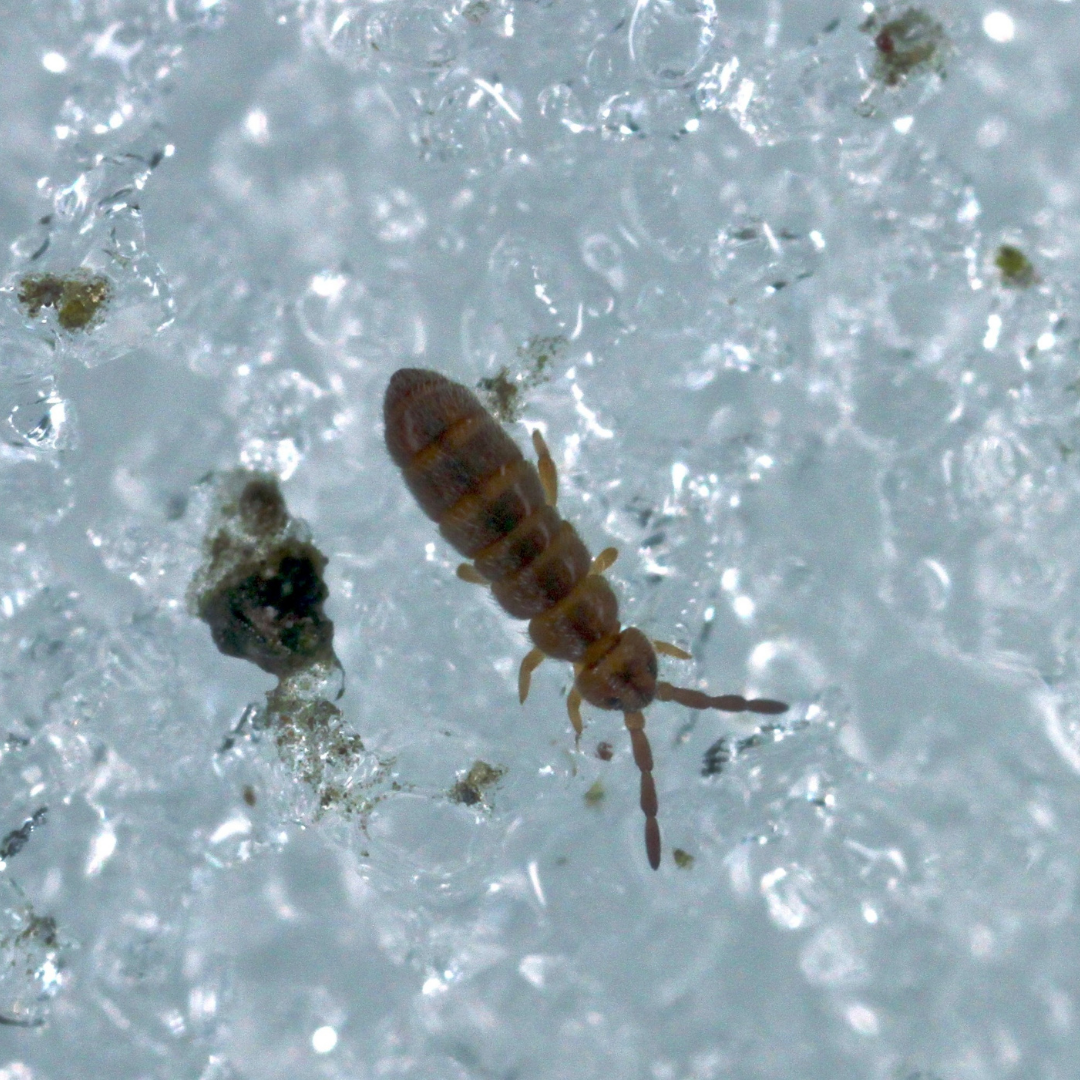
Sometimes snow looks disappointingly dirty, as though someone sprinkled black pepper on it. And you might think, wistfully, how those flakes, beautiful when fresh-fallen, so quickly lose their charm to grit and grime.
But wait! Maybe it’s not dirt. Are those little bits of debris moving? Jumping? If so, they might be snow fleas, Hypogastrura harveyi or H. nivicola, the most common species. If you see them, fear not: they are harmless—not really fleas at all—and, in fact, contribute mightily to ecosystem health in their role as decomposers. They often appear as if by magic on warm winter days, forming tight clusters and drifting in waves across the surface of the snow in mysterious migrations that have been measured as far as 25 meters.
Snow fleas are not the prettiest critters in the world, but they are arguably among the most interesting (and they have a lot of competition). Their name comes from their ability to jump like fleas. They’re actually a type of springtail, not even considered insects, but rather in a class (Collembola) related to crabs and lobsters. The scientific jury is still out on this classification, however.
Snow fleas are very small, only about 1/10th of an inch long, and dark blue-gray. They lack wings but they sure can jump! Unlike true fleas, who use their powerful hind legs to jump, snow fleas use a forked appendage called a furcula (little fork), located under their abdomens and held in place by clasp-like hooks until the snow flea is ready to leap. When released, the furcula snaps downward with great force, propelling the snow flea high into the air, often 100 times the length of its body, high and fast enough to avoid predators. When it lands, sticky anal sacs adhere to the ground or snow and prevent uncontrolled bouncing.
Snow fleas have what we might consider poor eyesight, but which is quite adequate for the lives they live, mostly underground. They don’t have compound eyes like many insects but instead have two eye patches, one on either side of the head, each with eight ocelli. Ocelli, a type of simple eye, are used to calculate the angle of the sun and help snow fleas orient themselves on snowy fields lacking landmarks. These eyes also calculate the sun’s elevation angle immediately before making a jump so their furcula can send them in the right direction to avoid a potential predator. When the sun is obscured by clouds, they use polarized light instead.
Orienting to the sun’s rays also helps with temperature control. Snow fleas can adjust their body position for maximum heat absorption on cold days, or to avoid the sun when it gets too hot. So those “simple” eyes aren’t so simple after all!
Snow flea life cycle
Snow fleas mate in early spring, when the snow is melting, and the female lays her eggs in the warming soil. In about three weeks, the eggs hatch and the nymphs emerge to spend most of their lives in the soil and leaf litter. They go through several molts as they grow larger and are full-size by fall.
Although they lead quiet, inactive lives for most of the winter, they start to emerge through breaks in the snow on warm days, especially in late winter. That’s when we notice them. What are they doing? Eating, of course, and mating.
As omnivores, snow fleas eat decaying leaves, pollen, mold, fungi, bacteria, pollen, algae, lichens, insect feces and microscopic animals like nematodes and protozoans. During most of the year, snow flea meals are found in the soil or leaf litter, but even in fairly fresh snow, they find tiny bits of organic matter by following chemical cues emitted by bacteria on the food source. This makes them important players in keeping winter ecosystems healthy.
Winter is a great time to be active because there are fewer predators, who might lack snow fleas’ high tolerance for cold temperatures. In winter, snow fleas produce the amino acid glycine, a rich antifreeze protein which prevents ice crystals from forming in their internal tissues.
How to help snow fleas
Snow fleas are so tiny that you’ve probably encountered thousands in your garden without knowing it. If they get into your house, however, they are more noticeable and less welcome. They’re attracted to moisture so the first steps are to turn on the dehumidifiers, fix leaky pipes, remove mold and mildew (food sources for snow fleas!) and generally improve ventilation wherever you see them. Keep organic debris away from your house’s foundation.
The kindest way to remove them indoors or on a patio is to sweep them gently into a dustpan and release them into a pile of leaves. (Watch out for jumpers!) Or use a vacuum cleaner and empty it outside. They do not bite or sting, but they don’t belong in houses. Remember that they’re important partners in ecosystem health, so releasing them outside will enable them to do their job.
4-H News: NatureCraft Club Makes Paper
from Brandy Keenan, 4-H Educator
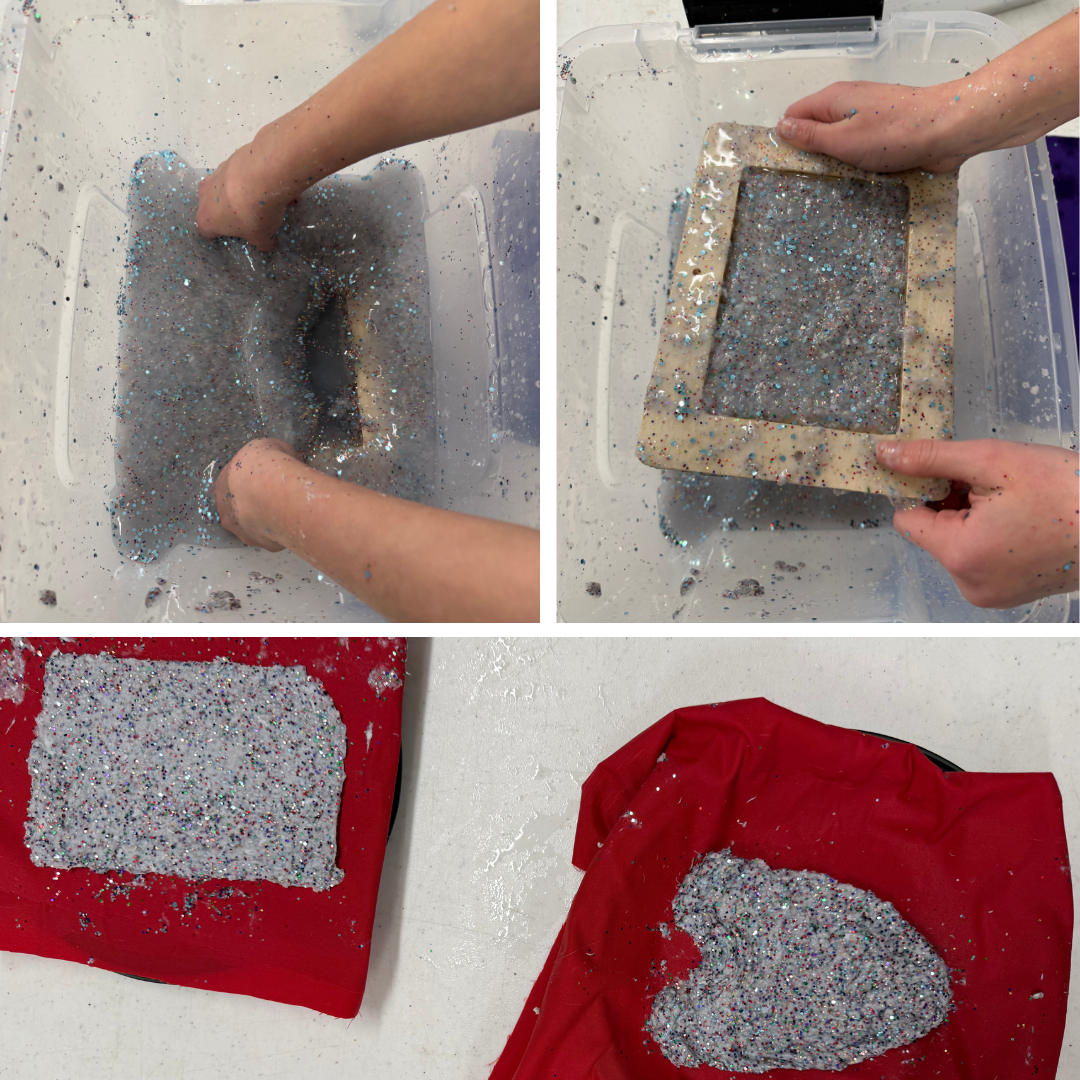
CCE’s new 4-H NatureCraft Club got their hands dirty making paper for Valentine’s at their last meeting.
Youth Members mixed shredded recycled paper and water in a blender until it was a mushy pulp. Then they squeezed as much water out of the pulp as possible using a sieve and a bowl. They really got their physical and sensory muscles working! The drained pulp was then placed into a bin with water and that’s when it got fun! Members added glitter and mixed it all up before using their mold and deckle to scoop up and drain the pulp. Once the mold seemed to have drained, members flipped the paper over onto a piece of cloth and used a sponge to suck up as much water as possible. This was then brought home to dry for at least 24 hours.
Another method of paper making had the members molding the dried pulp on a piece of plastic into heart or circle shapes.
Whichever way they did it, it was a great deal of recycled sensory fun!
Tilly Tally Spots 159 Birds During Winter Bird Count
by Karen Heller, Master Gardener Volunteer
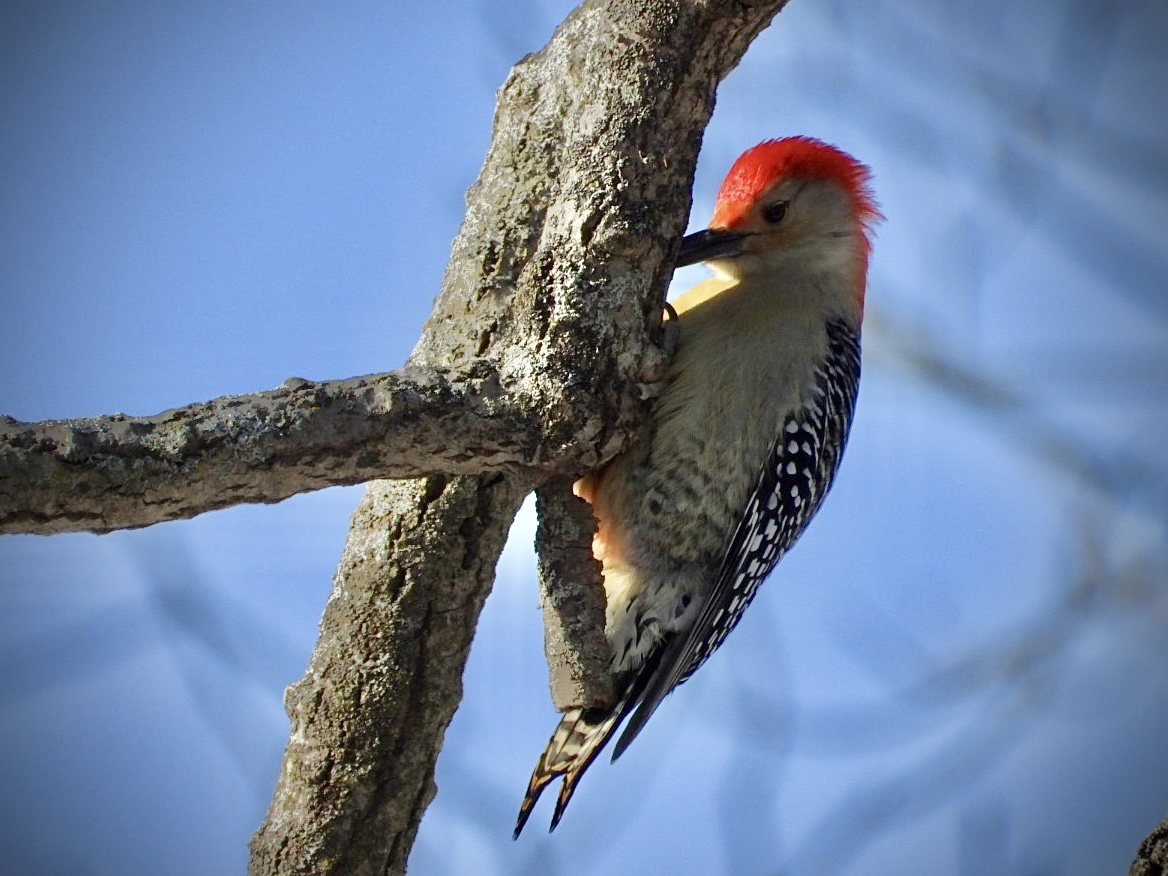
The artfully named “Tilly Tally” Winter Bird Count event at Tilly Foster Farm Forest offered attendees a guided opportunity to view and identify birds. Experts and volunteers from Bedford Audubon and Soldiers2Scientists helped to attendees identify woodpeckers of all sizes and types, several species of sparrows, hawks, a bald eagle, vultures, cardinals, blue jays, juncos, starlings, grackles, crows and ravens circling, and perhaps the star of the day: a hunting American kestrel perched high in a tree looking for lunch in the open fields. In total, 29 different species were identified and 159 individual birds counted.
In addition to birding, the forest provided us with a chance to view tracks and signs of bird and wildlife behavior marked in the snow. Hikers observed deer beds, tracks, and signs of bird and wildlife feeding, bathing and foraging. Birds bathe year-round to keep their feathers clean, which helps them stay warm. They bathe in snow as well as winter streams, explained John Hannan, President of the Bedford Audubon Board of Directors.
Conversation was free flowing on subjects including forest ecology, invasive species and the food sources of the creatures that overwinter in Putnam County. We learned that different species of overwintering birds often forage together in what is known as “mixed flocks,” taking advantage of the holes created by woodpeckers to sleep together at night - especially the smallest birds - keeping each other warm. They were also observed on Saturday sheltering in the chicken shed and other Tilly Foster Farm man made structures.
Hikers got a first winter look at the one-acre CCE forest regeneration project funded by a NYS Department of Environmental Conservation Community Reforestation grant. Invasive species in the area will be removed. The area will be replanted with native species over an initial 5-year period by CCE and volunteers. During the restoration of the forest, Soldiers2Scientists will train Veterans as citizen scientists to collect biodiversity data, build bird boxes, and plant seedlings into the forest. Soldiers2Scientists founder, Mike Cohn, is known as an expert in the American Kestrel, our countries’ smallest falcon. The first time he saw one it fought off two red tail hawks and a flock of crows defending its territory. The first time I saw one was at the Tilly Tally. It was an exciting addition to my life list.
If you are interested in visiting the site and learning more about birds, CCE with its partners Soldiers2Scientists and Bedford Audubon will be hosting an Owl Prowl on the Evening of Friday February 20th, and a Spring Migratory Bird Count on the 28th of March. If you can’t join us outside, join CCE’s Putnam Pollinator Pathway volunteers for the “Gardening for Birds and Pollinators” webinar, February 4th and learn how you can turn your landscape into a vibrant ecosystem.
Photo of a red-bellied woodpecker by Mike Cohn, Soldiers2Scientists
Celebrate Valentine’s Day with a Delicious Dessert

from Josephine Quiocho, Nutrition Educator
This recipe is special enough for a Valentine’s Day dessert and simple enough for an everyday snack. Fruit, nuts and chocolate. Do we need to say more?
Fudgy Fruit
Ingredients:
- 1/8 cup chocolate chips (or 2 Tablespoons semi-sweet chips)
- 2 bananas (large, peeled and cut into quarters)
- 8 strawberries (large)
- 1/4 cup peanuts (chopped, unsalted)
Directions:
1. Wash hands with soap and water.
2. Place chocolate chips in a small microwave safe bowl. Heat on high for 10 seconds and
stir. Repeat until chocolate is melted, about 30 seconds.
3. Place fruit on a small tray covered with a piece of waxed paper. Use a spoon to drizzle
the melted chocolate on top of the fruit.
4. Sprinkle the fruit with chopped nuts.
5. Cover the fruit and place in the refrigerator for 10 minutes or until the chocolate
hardens. Serve chilled.
Find the recipe at MyPlate: https://www.myplate.gov/recipes/fudgy-fruit
Source: Healthy Recipes, CalFresh Healthy Living


Last updated February 25, 2026

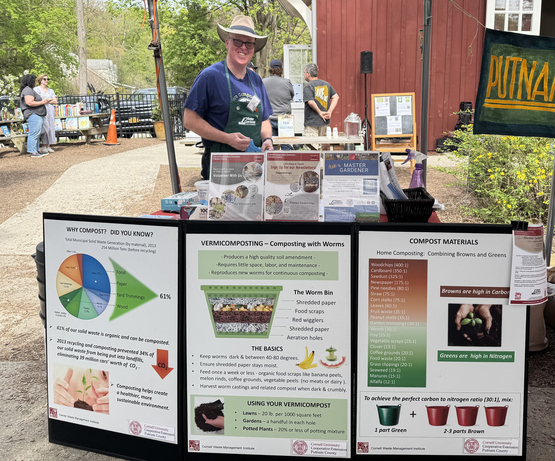
Jim Lynch, Master Gardener Volunteer
Jim Lynch grew up in the Throgs Neck section of the Bronx with the Long Island Sound in his backyard.
After high school, he went to nursing school and worked in Mount Vernon Hospital Intensive Care Unit and Bronx Municipal (Jacoby) Hospital Emergency Room.
“I was at work one morning in the ER when the New York City Personnel Department called me to be sworn in to the FDNY (New York City Fire Department),” he said. “I was a firefighter in Ladder 34 in Washington Heights in upper Manhattan before being promoted to lieutenant and assigned to Engine Company 92 in the Bronx.”
After retiring, Mr. Lynch heard about the CCE Master Gardener Volunteer Program and decided to apply. After completing the MGV training, he jumped into action and has volunteered in a number of garden and educational opportunities over the years.
“I have been involved with maintaining the SEDGe Garden and the Garden Around the Corner, delivering Bountiful Meals, working with the Hike Club, assisting with the initial stages of building the Hydroponic Greenhouse and helping out wherever I can,” he said.
Mr. Lynch noted that there are many talented volunteers and staff at CCE. He has learned new things about gardening, pollinators and has taken classes in composting, rain gardens and pollinator stewardship. He has taken what he’s learned and, with the help of other volunteers, has done demonstrations in the community on composting and rain gardens.
According to Mr. Lynch, the opportunities to volunteer in Putnam County are “varied and bountiful.”
“Find out what you enjoy and you can probably find a volunteer opportunity,” he said. Mr. Lynch is a CCE Master Gardener Volunteer as well as a volunteer with Putnam County Health Department Medical Reserve Corps.
As for what he likes about being a CCE volunteer, Mr. Lynch said, “The CCE volunteers are a talented group, always willing to share their knowledge. We have fun working in the gardens, doing demonstrations that share the knowledge we have acquired, spending time in nature and forming new friendships.”
February is ...
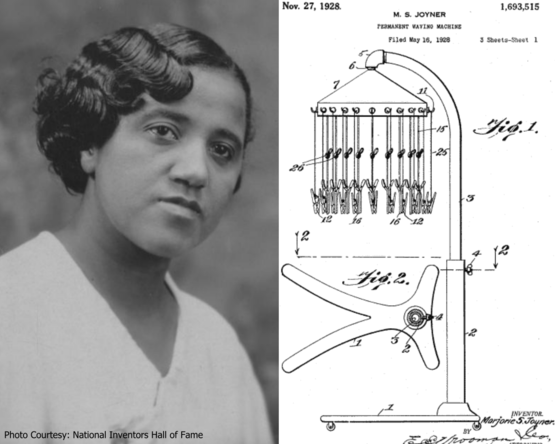
National Women Inventors Month
From the collapsible life raft to the outdoor fire escape to the permanent wave machine, February celebrates our country's women inventors. This month we honor the brilliant women whose innovations have shaped our world with life-saving technologies and groundbreaking discoveries.
Resource: WomenOnIt

National Bird Feeding Month
National Bird Feeding Month was established by Congress in 1994 to promote backyard bird feeding and conservation during one of the coldest, harshest months for wildlife. It encourages providing high-energy foods, clean water and shelter to help wild birds survive the winter.
Resource: Cornell Lab of Ornithology

Adopt a Rescued Rabbit Month
Adopt a Rescued Rabbit Month is dedicated to raising awareness for adopting rabbits from shelters rather than buying them. It highlights the need to provide loving homes for abandoned, neglected or surrendered rabbits while educating the public on their up to 10-year lifespan, care needs and unique personalities.
Resource: Bestfriends.org

National Hot Breakfast Month
National Hot Breakfast Month is celebrated to encourage people to start their day with a warm, nutritious meal rather than skipping it. It emphasizes taking time to prepare hearty, homemade breakfasts—like eggs, oatmeal or pancakes—to improve energy levels and focus, particularly during colder weather.
Resource: National Honey Board
Berry Fresh Month
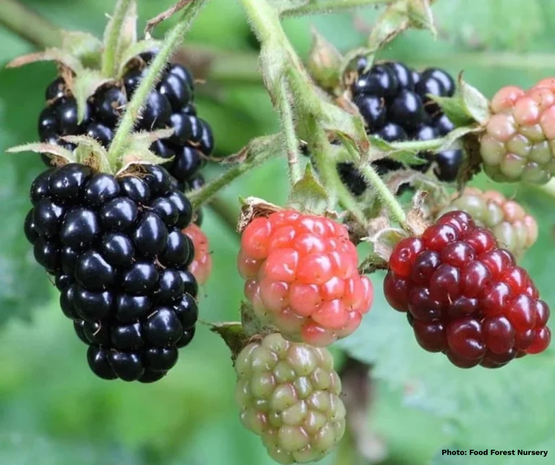
Berry Fresh Month brings awareness to various berries and their nutritional value. Celebrate by enjoying fresh berries in smoothies, salads or desserts. Learn about different berry types, including less common ones like currants. Visit our online Seedling Sale when it opens Feb. 17 to check out the berries you can plant in your own yard including Red Lake currants, thornless blackberries and elderberries!
Resource: SNAP-Ed NY
American Heart Month: Take Charge of Your Health
from American Heart Association
More than 350,000 out-of-hospital cardiac arrests occur in the United States each year. This February, during American Heart Month, the American Heart Association is calling on everyday citizens to be agents of change by stepping in as the first responder until professional help arrives.
Nine out of every 10 people who experience cardiac arrest outside of a hospital die, in part because they do not receive immediate CPR more than half of the time. The American Heart Association, devoted to changing the future to a world of healthier lives for all, envisions communities where people don’t wait for help – they become it.
The Association’s Nation of Lifesavers initiative offers suggestions on how to take charge of your personal health and inspire a Nation of Lifesavers this American Heart Month:
- Learn CPR and join the Nation of Lifesavers™. To learn more about CPR, including new CPR guidelines published in Circulation this fall, visit heart.org/nation.
- Make a plan. During a cardiac emergency, a well-developed plan could make all the difference. Don’t wait for help, become it. Remember, you are the first responder until professional help arrives. A cardiac emergency response plan (CERP) establishes specific steps to reduce death from cardiac arrest in any setting – be it a school, community organization, workplace or sports facility. Learn more about CERPs and find free resources at heart.org/cerp.
- Get Local. Join a local Heart Walk. Strong communities are built by preparedness. So, check in. Lace up. Whether it’s joining a Heart Walk team, taking a CPR class or making sure your office, school or church has a plan, now is the time to take charge of your own health and the health of your community.
Cardiac arrest can affect anyone, anywhere – at the gym, in the grocery store or during a child’s soccer game. However, bystanders only intervene less than half of the time, often due to uncertainty or lack of training. Yet CPR, especially if performed immediately, can double or triple a person’s chance of surviving sudden cardiac arrest.
“In an emergency, bystanders don’t need medical training to save a life. All you need is knowledge, courage and the willingness to act,” said Marisol Vera, executive director American Heart Association, Miami. “I’ve learned through the American Heart Association that cardiac arrest can happen to anyone. But it’s also true that anyone can step up and save a life, whether it’s a stranger or someone they love, by learning CPR and taking action in an emergency.”
The goal of the association's Nation of Lifesavers initiative is to turn bystanders into lifesavers, so that in the face of a cardiac emergency anyone, anywhere is prepared and empowered to become a vital link in the chain of survival and provide CPR.
The Heart Association leads global efforts in public awareness, education and policy change, while also serving as the scientific authority that develops the official CPR and emergency cardiovascular care guidelines used by other CPR and first aid training providers in the U.S. and in over 90 countries worldwide.
To join the Nation of Lifesavers and continue to raise awareness during American Heart Month, visit heart.org/nation. Nation of Lifesavers is nationally sponsored by Walgreens.
National Invasive Species Awareness Week: Defending Our Health
from North American Invasive Species Management Association
The North American Invasive Species Management Association (NAISMA) has announced the return of National Invasive Species Awareness Week (NISAW) from Feb. 23 through 27, bringing together leaders from government agencies, Tribal nations, nonprofit organizations, academic institutions and community groups for the nation’s largest cross-sector effort to prevent and manage invasive species.
With this year’s theme, “Defending Our Health by Stopping the Spread,” NISAW 2026 highlights the undeniable link between invasive species and human well-being. Invasive plants, animals, insects and pathogens increasingly threaten public health, food security, recreation, infrastructure and ecosystem stability across North America. This year’s events emphasize coordinated action and practical prevention strategies that every individual, organization and policymaker can take.
“Invasive species impact every community. Whether through wildfire risk, agriculture losses, water shortages, vector-borne diseases, or damage to critical infrastructure,” said Christie Trifone-Millhouse, executive director of NAISMA. “This year’s theme underscores a powerful truth: Protecting our environment is directly tied to protecting our health. NISAW 2026 is a rallying point for collaboration and solutions.”
NISAW 2026 will spotlight key issues such as:
- Public health impacts of invasives, including allergens, toxins, and disease vectors;
- Aquatic invasive species threatening drinking water systems and fisheries;
- Forest pests and pathogens are increasing wildfire risk and reducing carbon storage;
- Agricultural and economic damages affecting food systems and rural communities; and,
- Best practices for prevention, including recreation-based spread prevention, clean equipment protocols, and biosecurity principles.
Throughout the week, NAISMA will host free national webinars, policy discussions and a congressional briefing designed to educate and activate stakeholders at every level.
A full schedule of events will be available at https://naisma.org/programs/nisaw/.
Invasive species cost the U.S. more than $120 billion each year. Yet, many of the most effective solutions (early detection, rapid response, behavior-based prevention, and interagency coordination) receive limited attention outside the professional field. NISAW continues to fill this gap by connecting practitioners, policymakers and the public around a unified message: We all have a role in preventing the spread.
NAISMA invites federal, state, Tribal, regional and local partners as well as educators, outdoor recreation groups, businesses, and the public, to participate in NISAW 2026 by:
- Attending NISAW webinars;
- Sharing educational messages across social media;
- Hosting local events or trainings; and,
- Highlighting community successes
Individuals and organizations can register for events and download free resources at https://naisma.org/.
The North American Invasive Species Management Association (NAISMA) is a nonprofit organization dedicated to empowering invasive species professionals and partners across North America.
Winter driving tips to keep you safe on the roads
from West Virginia University Extension
The USDA Forest Service provides many tips for winter driving. Here are some highlights that can help you stay safe during the time of the year when roads are most difficult to travel.
Before you head out, be sure to check the current weather conditions and forecast. Safe planning is a key factor in reducing risk when traveling in less than perfect conditions.
Before You Travel
If you must drive in snowy or icy conditions, before you leave be sure to:
- Let family or friends know that you are traveling and what your intended route and destination time is.
- Have your cell phone in case of emergency. Be sure to charge it before you leave.
- Keep your gas tank filled so that your care can start without difficulty, you do not need to worry about stopping to refuel. This also ensures that you have extra fuel that can be used in to heat the car longer if you must stop driving.
- Be sure that your tires have the appropriate level of pressure and tread capability before you set out, as well.
Stay Safe on the Road
Once you are on the road, it is important to keep the following tips in mind.
- When trying to go up a snowy or slippery hill, do so in the highest gear possible. This reduces the possibility of your tires spinning. Do not slam on the gas or gun the motor.
- When navigating down a hill, stay in a low gear. This decreases your overall speed and the necessity to use the brakes, which reduces the amount of abrupt sliding caused by braking.
- Keep in mind that if the gear is too low it increases the drag and may cause wheels to lock.
- Most newer cars feature anti-lock brakes, which automatically “pump the brakes” to stop wheels from locking up. If your car does not have this feature and you find yourself not in control of your car, “pump” the brakes instead of slamming them with force.
- Be cautious of drivers around you. All drivers react differently to snow and ice on the road. Keep extra distance between your car and others. Be aware that other drivers may be nervous, make rash decisions or drive with too much confidence in dangerous conditions. Always be on the lookout for possible accidents ahead.
- Do not use cruise control in snowy and icy conditions. You are unable to control acceleration and deceleration as quickly and effectively when using cruise control, which are vital when driving in wintery conditions.
- Just like the signs say: “Bridge May Be Icy.” Bridges and surfaces that experience times of intermittent dry and ice tend to freeze first and be more unpredictable than other roadways. Exercise caution when crossing these areas.
- Think of the safety of others and yourself. If you find that you are unable to control your car in the conditions, it is much smarter (and safer) to slide into a snow drift, rather than a busy intersection.
More Resources:
Check out New York DOT’s 511 website for current road conditions at https://511ny.org/ or dial 511 on your phone.
What should you do if a blizzard traps you in your car? Follow these suggestions from the Federal Emergency Management Agency.
Learn what the FEMA recommends including in a winter travel kit. See kit contents.

CLICK HERE and become a part of our efforts
to build our new home at Tilly Foster Farm!
Tidbits

CCE Scholarship Opportunities
CCE Putnam County is offering several scholarship opportunities for graduating seniors who live in Putnam County. Applications for all scholarships are due April 30 and can be submitted online after March 1.
The Master Gardener Volunteers Scholarship is sponsored by the Master Gardener Volunteer program of CCEPC and will award one $1,000 scholarship to an individual pursuing a degree in the field of Plant Science, Horticulture, Floriculture, Architectural Landscape Design, Forestry, Botany or environmentally related program.
The Hebe Gordon 4-H Scholarship is administered by CCEPC. One scholarship of $500 will be awarded to a young person who has been actively engaged in the 4-H Horse or Animal Science Club Program for at least three years, and who will be pursuing further education upon high school graduation.
The William C. Nichols 4-H Memorial Scholarship is sponsored by the Family of William C. Nichols and administered by CCEPC. There is one $1,000 scholarship awarded to an individual who has been part of 4-H for 3 years and demonstrates leadership and community engagement through 4-H, school and other organization activities.
All awardees will receive their scholarship money after completion of the first semester of college and after submitting a copy of the semester’s transcript to CCEPC within one month of completion of first semester.
Learn more about our scholarships on our website.
Let's Get Physical
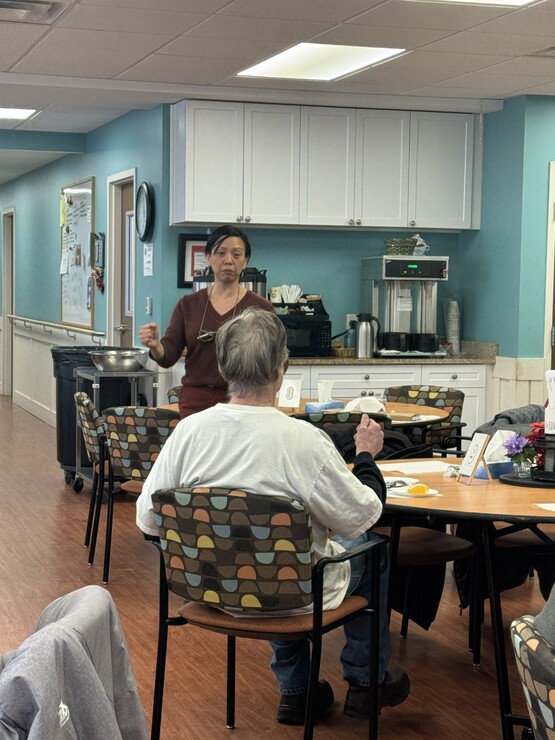
During the month of January, SNAP-Ed Nutrition Educator Josephine Quiocho visited the Office of Senior Resources' Friendship Centers countywide. She demonstrated how to make simple but delicious overnight oats as well as how to stay active with simple, easy-impact exercises people can do while sitting in or holding onto a chair.
First Lunch and Learn Zoom Focuses on Fermentation
The Winter Fermentation Zoom Class brought together home cooks from across the county for an engaging, online deep dive into safe, smallbatch fermenting with winter produce. The class walked participants through the science of lactofermentation and showed how simple it can be to turn cabbage, carrots, radishes, and other storage crops into flavorful, probioticrich foods.
During the live session, participants learned why salt concentration, temperature and anaerobic conditions matter, how beneficial bacteria outcompete spoilage organisms, and what visual and sensory signs distinguish a healthy ferment from one that should be discarded. The instructor demonstrated step-by-step how to make a basic sauerkraut and a simple brined root vegetable mix, shared tips for adapting recipes to what is available locally in winter, and highlighted evidence-based food safety resources for continued learning.
The interactive format—complete with polls, Q&A and camera-on jar-packing demos for participants at home—helped demystify fermentation and made it feel accessible, even for beginners working in small kitchens. Many attendees said they were excited to start their own jars that same week and wanted to keep building their preservation skills through future offerings.
For anyone who missed this Zoom class but is curious about fermentation, there are two more handson food preservation workshops coming up over the next two months, each designed to deepen understanding while staying approachable and practical. These upcoming sessions are a great way to explore new techniques, ask questions in real time, and gain confidence in preserving seasonal foods—early registration is encouraged.

Hannaford Community Bags to Raise Funds for CCE Putnam
Cornell Cooperative Extension Putnam County has been selected as a nonprofit partner in the Hannaford Community Bag Program for the month of February. We will receive $1 for each $2.50 reusable Community Bag sold at Hannaford, 162 Route 22 in Pawling.
Rotary Community Basketball Challenge is Back Feb. 28
Would you like to shoot some hoops? Maybe you’re more the spectator and would like to make a pledge? Either way, you can support CCE Putnam at the 19th annual Community Basketball Challenge sponsored by the Carmel Rotary Club, the Carmel High School Interact Club and the Carmel High School Mentor Club Feb. 28 from 9 a.m. to noon at the Carmel High School Gym.
You don’t have to be a basketball player to participate. You receive pledges or flat donations from friends and family and shoot as many baskets as you can in 2 minutes.
The Community Basketball Challenge helps local organizations raise money during this fun community-building event. Participating organizations receive 90 percent of funds collected in their name. The other 10 percent goes toward Rotary scholarships and other programs. Since 2008, the challenge has raised over $675,000 with close to 100 local organizations benefiting from the proceeds.
For more information about the event, please e-mail the Carmel Rotary at rotary.carmel.ny@gmail.com or visit www.carmelrotary.org and click onto the Basketball Challenge link at the top of the webpage.
At a Glance ...

Food Preservation Lunch & Learn Series
Thursdays, Feb. 19; March 19
12 to 1 p.m.
Zoom
CCE Putnam Ag and Food Systems Coordinator Ruby Koch-Fienberg will be teaching two Thursday Food Preservation Lunch and Learn classes via Zoom.
Feb. 19 - Beginners Guide to Canning and Food Preservation
March 19 - Planning Your Garden for the Jar
The price is $5 for each class.
Register HERE.
Gardening for Birds and Pollinators: Creating a Vibrant Ecosystem
Wednesday, Feb. 4
6:30 to 7:30 p.m.
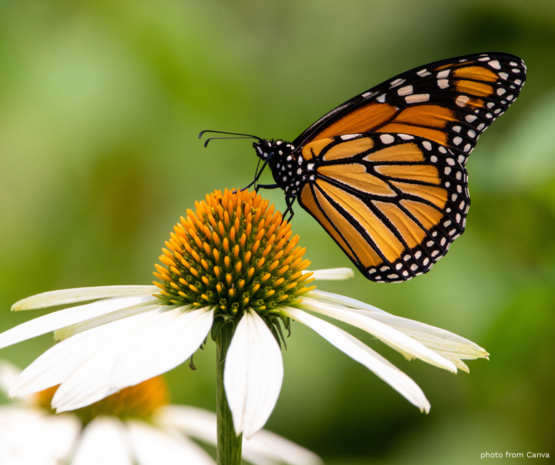
Have you thought having more cheery, bright and beautiful birds around might be nice? Maybe even more butterflies? But you are not sure how to make your property more inviting to them?
On February 4, two members of the Putnam Pollinator Pathway will offer a Zoom presentation “Gardening for Birds and Pollinators” aimed at helping gardeners begin or expand their gardens to make them a year-round haven.
From blooms to berries, from design tenets to final delights, the presentation will cover the whys and hows of gardening for our winged friends. We want you to leave with a fresh perspective and new ideas.
Suggested donation of $5
Register HERE.
Putnam County Tree & Shrub Seedling Sale
Sales Open Online Tuesday, Feb. 17
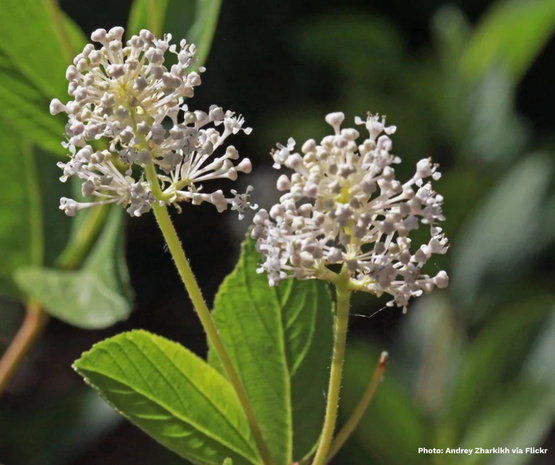
Cornell Cooperative Extension and Soil and Water Conservation have teamed up to offer a wonderful selection of trees and shrubs. The seedling sale has a long-standing tradition of planting trees and shrubs that create habitat and protect water quality. Our selection of plants includes native trees, shrubs, and perennials that support birds and pollinators.
We will once again have a selection of cost-effective native plant plugs. These small perennial starts are a thrifty way to get a head start on creating your backyard habitat. From shade to sun, we have you covered. Be sure to shop before the deadline of March 27. Plants will be sold online only, on a first-come first-reserved basis, and there are limited quantities of seedlings.
For more information, visit HERE.
Owl Prowl
Friday, Feb. 20
5 to 8 p.m.
Tilly Foster Farm
100 Route 312, Brewster
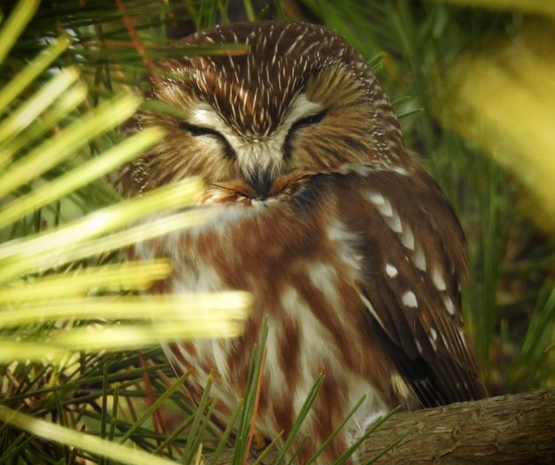
Join is on Feb. 20 for a visit from a real owl at the Restore and Regenerate Forest at Tilly Foster Farm in Brewster. Chris Evers and an owl ambassador from Animal Embassy will join us to teach you more about these amazing animals. Activities are outdoors and will include a woods walk where participants will look and listen for local owls with Bedford Audubon Volunteers and Soldiers2Scientists staff. Veterans and their families are especially welcome. Join us for an evening prowl to learn more about these amazing hunters. Registration is required.
Tiered pricing: $20, $30, $40
Register HERE.
Spring Emergence – Living with American Black Bears
Saturday, March 7
10 a.m. to 12 p.m.
Clearpool Model Forest
Green Chimneys Clearpool Campus
33 Clearpool Road, Carmel
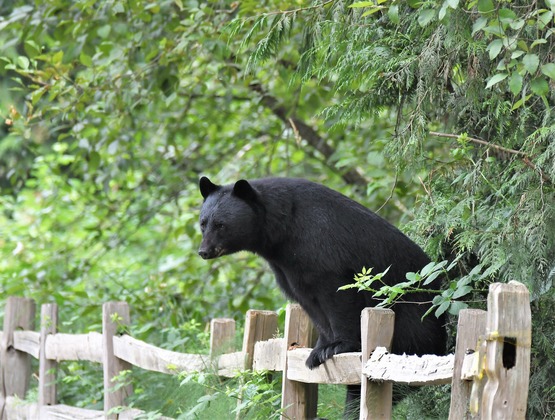
Spring emergence of curious bears can lead to more sightings. Learn about bears & tips to coexist responsibly and avoid unwanted encounters.
Join us to learn the bare necessities of living responsibly with black bears roaming the neighborhood. Hear from a NYS Department of Environmental Conservation Wildlife Biologist about black bears lifestyle and habitat, while learning safety tips and best practices to coexist with bears while avoiding unwanted encounters at home or on the trail. Participants will have access to educational handouts provided by CCE, NYSDEC and BearWise! Stick around after the presentation for an optional short hike to look for wildlife enhancements and bear activity with CCE!
Presented by: NYSDEC Wildlife Staff, CCE Columbia – Greene, CCE Putnam
There is a $25 registration fee.
Register HERE.

Aspiring Farmer Day
Saturday, March 14
9 a.m. to 3 p.m.
Location to be announced
Join us for Aspiring Farmer Day, a hands-on learning event designed to help beginning and prospective farmers take the next step in their agricultural journey. Hosted by Cornell Cooperative Extension Putnam County and the ENYCHP team, this day offers a chance to learn directly from regional experts and connect with other new farmers.
Perfect for anyone considering a farm start-up or expanding an existing operation.
There is a $30 registration fee.
The Birds Are Back in Town
Saturday, March 28
8 a.m.to noon
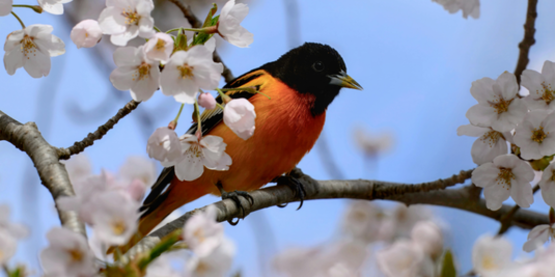
The birds are back in town! Join us as we look and listen for migrating birds as they pass through our on the way to their summer nesting quarters. Tilly Foster Farm’s fields and forests offer diverse viewing opportunities for observing these awesome creatures. Volunteers from Bedford Audubon and staff from Soldiers2Scientists will be on hand to help you navigate the world of birding.
There is a tiered registration: $0, $10, $20
Register HERE.
Natural Refrigerant Training Summit: Building a Sustainable Technician Workforce
Feb. 10 through 12
Poughkeepsie
CCE Mid-Hudson Regional Clean Energy Hub is co-sponsoring the North American Sustainable Refrigeration Council's free Natural Refrigeration Training Summit: Building a Sustainable Technician Workforce, Feb. 10 through 12 in Poughkeepsie.
This event will provide free training for refrigeration technicians from multiple manufacturers and industry experts:
- Concurrent training sessions for technicians on CO2 and propane technologies
- Exhibit hall featuring the latest natural refrigerant products and service offerings
- Hands-on training break-out sessions with access to equipment
- February 12: Optional Half-day CO2 Workshop (SIGN UP REQUIRED)
Register HERE.
Registration to Open for DEC Summer Camps
New York State Department of Environmental Conservation (DEC) has announced online registration for DEC’s 2026 Summer Camps program will open Sunday, March 22, at 1 p.m.
The DEC Summer Camps program offers week-long adventures in conservation education for children ages 11-17. DEC operates four residential camps for kids: Camp Colby in Saranac Lake, Franklin County; Camp DeBruce in Livingston Manor, Sullivan County; Camp Pack Forest in Warrensburg, Warren County; and Camp Rushford in Caneadea, Allegany County.
At camp, kids will have the opportunity to participate in a wide variety of outdoor adventures and are encouraged to try new things. Activities that accommodate all may include fishing, birding, fly-tying, archery, canoeing, hiking, camping, orienteering, and hunter safety education.
Each camp offers four or five weeks of Hunter Education Program courses covering riflery, bowhunter, or trapping safety and education. Class size is limited for hunter education programs and campers must sign-up during registration and complete required homework in advance. Registered campers will receive booklets prior to their session at camp.
Camp Pack Forest will offer an “Outdoor Adventure Week” during Week 4 (July 19 – 24) and Camp Colby will offer one during Week 6 (August 2 – 7). DEC encourages teens ages 14 to 17 who love being outdoors to sign up for this popular program that will help deepen their enjoyment and widen their horizons. During these weeks, campers will develop hands-on outdoor skills that go above and beyond the traditional camp week. In addition to our typical camp activities, campers may be engaged in team and trust-building activities, forestry, citizen science, conservation science, and more.
Campers will be introduced to a variety of environmental fields and exciting activities including longer trips. These weeks are a great option for returning campers.All four camps will offer seven one-week sessions (Sunday to Friday) beginning Sunday, June 28. One week of camp is $350 per child for 2026, and includes meals, trips, and a camp t-shirt.
Individuals, sporting clubs, civic groups and environmental organizations are encouraged to sponsor one or more children for a week at camp. Information about becoming a sponsor and managing sponsor accounts is available at Sponsoring Youth to Camp on DEC’s website.
For more information, please visit the DEC’s website, email EducationCamps@dec.ny.gov.