Happenings August 2026

August 2026
Putnam County Fair by CCE Putnam
It Was a Fun-Filled Weekend at the Putnam County Fair & 4-H Showcase
by Rachael Paradise, Communications Coordinator
With beautiful weather and tons of fun for everyone, we marked another great weekend at the Putnam County Fair & 4-H Showcase July 25 and 26 at Veterans Memorial Park in Kent.
We couldn’t have done it without our partnership with Putnam County, especially the county DPW Parks’ crew led by Chris Ruthven! Months of planning, days of setting up and hours of preparation were the result of the work we do together! Our 4-H members and leaders, CCE volunteers, families and friends, Board of Directors and staff worked tirelessly for much of the week prior and for both days of the event. In addition, Putnam County Tourism Director Tara Keegan made sure everyone knew about the event and Putnam County Historian Jennifer Cassidy made history come to life for fairgoers with Rev 250 reenactments, a Sybil Ludington Hobby Horse Course and history exhibits and activities. The bands that performed were outstanding and entertained our fairgoers, and let’s not forget the food trucks and vendors–amazing!
The fair’s 4-H Showcase, in and outside of the Trainor Barn, included youth demonstrations and crafts, animal exhibits, agriculture, archery and horse presentations as well as fun for kids in the Crafts and Games tent. In the Expo building, attendees sought expert advice at our Ask A Master Gardener booth and at our 4-H, Putnam Pollinator Pathway, Nutrition, Bug-Zooka and Composting tables. They perused the plants in the pollinator garden display and checked out the great youth exhibits. New this year, was our adult Big Beautiful Blossom flower exhibit, which showcased the flowers people grow at home, and a Makers Space, featuring fiber spinning, sewing, crochet and knitting. We were joined in the Expo building by the County Clerk’s office and DMV as well as our friends from Sustainable Putnam, Mid-Hudson Energy, Hudson Highlands Land Trust and Soldiers 2 Scientists. And, right outside the building, we sold so many milkshakes!
Thank you to those who came out for the Opening Ceremony – the 4-H Cloverbuds, Putnam County Sheriff's Office Color Guard and state, county and municipal officials.
And thank you to our wonderful donors and sponsors: A-Class Builders Inc.; Ace Endico, Brewster; ACME Markets; Agriventures Agway, Danbury; Badey & Watson, Surveying & Engineering, DPC; Bennett Chiropractic, PLLC; Brewster Glass Shop; Burger King, Brewster; Byron’s Patterson Auto Body; Central Hudson Gas & Electric; Charles P. Stein, CPA; Chestnut Petroleum Dist. Inc.; DeCicco’s & Sons, Brewster; Doyle Dental; Empire Bagels, Brewster; Foo Kan Inc.; George Hartshorn Paving; Hannaford, Pawling; Insite Engineering, Surveying, & Landscape Architecture, P.C.; Jaipore, LLC; Joseph J. Smith Funeral Home; Knights of Columbus Council 6318; Law Offices of Joseph J. Tock; Ledley Food Service; LesserEvil Snacks, Danbury; Lilina’s Bagel & Catering; MacDonald Marine Inc.; McDonald’s, Carmel; PCSB Community Foundation; Putnam Community Action Partnership; Putnam County Economic Development Corp.; Scoops-N-More; Starbucks, Carmel; Strength of the Mind Psychiatry; Thai Elephant 2 Restaurant; The Allan Twitty Insurance; TOPS, Carmel; and Tractor Supply, Patterson.
Part 2: Is Your Pollinator Garden “Messy”? How “Cues to Care” Can Help
by Erika West, Master Gardener Volunteer, Putnam Pollinator Pathway
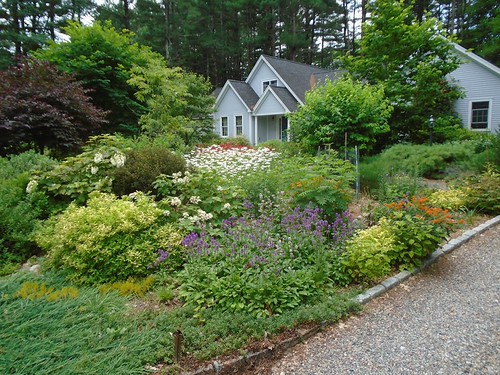
“Messy,” “unkempt,” “weedy”: these are words often used to describe ecologically forward gardens. The perception that your property is neglected can have real consequences: visits from the town, fines from your homeowners’ association, demands you clean up your space. So, what can an ecologically minded gardener do? The answer may lie in addressing the chief misperception that you don’t take care of your property.
“Cues to care” are landscape elements that communicate intent and care of a landscape. The concept was first written about by professor and landscape architect Joan Iverson Nassauer in an essay entitled “Messy EcoSystems, Orderly Frames” (1998). Nassauer recommends incorporating familiar elements from traditional landscaping into non-traditional landscapes.
Last month in Part One of this two-part series we addressed the basic design elements of “Cues to Care.” Part Two delves into the plants that will invite both the pollinators and the neighbors to enjoy your gardens.
PART TWO: The Plants
Add Familiar Plants:
The good news is native plants are more accessible than ever; the bad news is many, especially those with small flowers, are often mistaken for weeds. In highly visible areas, consider including flowering plants found in more traditional landscapes or showy native cultivars to help communicate intent in your planting. Carefully chosen non-natives can be resilient, functional and attract your neighbors’ attention and understanding through their recognizability and familiarity.
For the biggest effect, plan your garden to always have something in bloom. It’s not only good for pollinators, but Nassauer’s research found that when ecological “restorations or gardens include an ‘unnaturally high’ proportion of plants with larger, brighter, flowers, at least in the first few seasons, people are more likely to find them attractive” (Messy Ecosystems, Orderly Frames, 1998). If you’re just starting your garden, try filling in gaps with colorful annuals. As perennials, trees and shrubs grow and take up more space, they’ll shade and outcompete the annual re-seeders.
And, don’t snooze on flowering trees—not only are native trees vital to pollinators, as “compared with shrubs or grasses, people are more likely to immediately appreciate trees” (Messy Ecosystems, Orderly Frames, 1998).
Take Control of Problematic Plants:
Get rid of plants that require too much maintenance—or relegate them to areas out of sight. These are plants that don’t perform well, get too tall, flop in paths or aggressively outcompete other plants thereby reducing legibility.
If you don’t want to relocate or be rid of your more wild plants, try taming them with staking or the “Chelsea Chop.” The Chelsea Chop is a pruning technique whereby you reduce the height of perennials by 1/3 - 1/2 to keep them from growing too tall, becoming floppy or to derive other benefits such as increased fullness or delayed flowering. Named after England’s Chelsea Flower Show, this technique is typically used before the end of May to allow enough time for regrowth and bloom. It works best on tall, late summer or autumn flowering perennials like asters, monarda and coneflowers and is not successful for all perennials. In essence, pinching back your plants in this way simulates animal browse that occurs in unmanaged landscapes. Before giving your plants the chop, be sure to do some research to see if yours are a good fit for this technique.
Alternatively, planting densely and surrounding floppy plants with more structured ones creates built-in support to keep plants upright. Landscape designers will often disregard spacing suggestions on plant tags, instead opting to plant on 12-inch centers. This technique covers bare ground more quickly (thereby crowding out weeds), looks more natural and increases competition for water, nutrients and space thereby keeping plants shorter. Planting perennial grasses (not turf grass) can also help achieve this goal as they can provide structural support and use up excess nitrogen.
Avoid “Cues of Neglect”:
In addition to removing or managing problematic plants, avoid other obvious “cues of neglect” (Benjamin Vogt, Prairie Up) by keeping up with home and hardscape maintenance. Peeling paint, broken benches, perennially empty bird feeders, holes in your plantings, can contribute to confusion about your landscape. Do you need to be perfect? No, and in some contexts, the worn, lived-in feeling of old and not-perfectly-maintained structures can add character, history or simply be realistic to life. If you’re struggling with perceptions about your property though, it might be worth considering whether and what you can do to achieve more balance.
Think about Winter: In ecological gardening, perennials and grasses remain standing until spring to allow overwintering habitat for beneficial insects and other creatures. To improve winter aesthetics, consider the form plants will take when it gets cold and wet. For example, coneflower stems will stay upright with attractive seed heads and moss phlox will remain evergreen, whereas hostas will collapse too much. Plan to incorporate a mix of plants that stand up to the elements and continue to provide visual interest throughout their lifecycle.
Alternatively, do as the Lurie Garden in Chicago does and create “stem nesting zones” instead of leaving the whole of your garden standing. This may help bridge the cultural divide between the ecological and the cultural norm of cutting gardens back in fall.
Have a Maintenance Plan:
Be realistic about upkeep, plant densely so you don't have to mulch every year and use ground covers to fill gaps and crowd out weeds. Be mindful of each plant’s requirements and use ones that have similar maintenance needs. If you mix in species that need special treatment—more watering, more pruning, or no pruning when everything else needs cut back— you’re going to have more work to do.
References:
https://www.jstor.org/stable/43324192?read-now=1&...
https://www.sciencedirect.com/science/article/pii...
https://seas.umich.edu/news/landscapes-can-talk
https://gardeningsolutions.ifas.ufl.edu/care/flor...
https://www.thenatureofcities.com/2018/08/24/cues...
https://www.humanegardener.com/wild-design-home-g...
https://www.monarchgard.com/thedeepmiddle/simple-...
“Planting in a Post-Wild World: Designing Plant Communities for Resilient Landscapes,” Thomas Rainer and Claudia West
“Nature's Best Hope: A New Approach to Conservation That Starts in Your Yard” (2019), Doug Tallamy
Dyck Arboretum of the Plains, Youtube
Photo credit: Medfield, Mass., landscape designed by Betty Sanders using 90-95 percent native plants by Neal Sanders.
Bug of the Month: Braconid Wasp
by Janis Butler, Master Gardener Volunteer
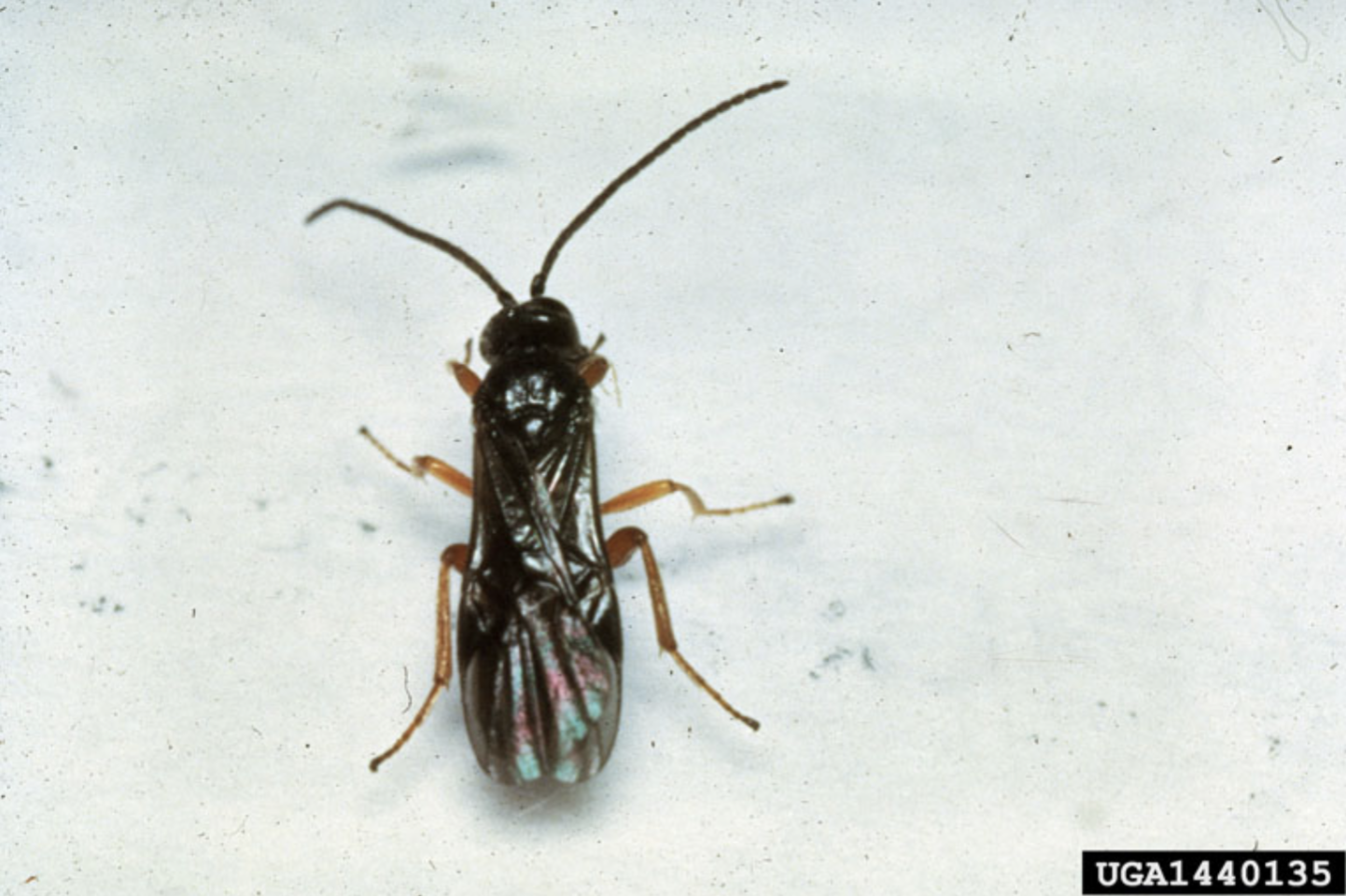
Vegetable gardeners, take note: If you’re worried about tomato hornworms, cabbage worms and cabbage loopers, army worms, aphids, leaf miners, or other garden pests gobbling up your harvest, relax (at least a bit) for help is on the way. As your least-favorite larvae begin to dine on your plants, braconid wasps sense their presence and fly to the rescue.
Braconid wasps are parasitoids, deadly to veggie-eating caterpillars but harmless to humans since they don’t have stingers. A parasitoid kills its host, unlike a parasite, which tends to live with its host.
Let’stake a look at Cotesia congregata, a familiar braconid in our area who specializes in tomato and tobacco hornworms. She doesn’t have a common name other than ‘hornworm wasp’ because there are so many species of braconids: 30,000 - 50,000 worldwide, with only a small fraction formally described by scientists. Braconids are one of the most species-rich families in the animal kingdom. Most are too tiny — 1/16 to 5/8 inch—to be noticed in our gardens.
If you were to see a Cotesia congregata — a black braconid wasp less than 1/8th inch long — near your tomato plants, it’s likely that she’s found a hornworm and is ready to lay her eggs. She does this by inserting her needle-like ovipositor into the hornworm’s skin and injecting 60 to 100 eggs inside it.
The caterpillar is not entirely defenseless against the coming onslaught of wasp grubs, having an immune system that could come to its rescue. But the wasp, when laying her eggs, also injects teratocytes (specialized cells), venom and a virus specific to braconids. When the egg hatches, the teratocytes release hormones that work with the venom to suppress the caterpillar’s development, preventing pupation, which would be detrimental to the braconid larva. The virus — a bracovirus, only associated with braconid wasps — suppresses the caterpillar’s immune response. Amazingly, the bracovirusdoesn’t exist until it is created —spun — out of the wasp’s own DNA.
In two to three days, the eggs hatch and wasp larvae emerge, tiny grubs whoimmediately begin to eat the caterpillar from the inside out. They spend about two weeks feeding on the caterpillar’s blood and non-essential organs, avoiding the heart and central nervous system in order to keep the caterpillar alive and edible until they’re ready to pupate.
When ready, they chew their way out through the caterpillar’s skin and begin to spin silken white cocoons. You may have seen a dead hornworm covered with these cottony structures and mistaken them for eggs. In four to eight days, depending on weather, the adult wasp breaks out of the cocoon. She first cleans her antennae, stretches her wings, and allows a few minutes for her exoskeleton to dry, then flys off to feed on pollen and nectar, stocking up on the energy resources she needs to mate and lay eggs. Male braconid wasps have much shorter lives since their only function is to mate with the females. They emerge from their cocoons earlier than the females, so they’ll be ready to mate as soon as the females appear.
In our area, there are usually two to three generations per year. The last generation spends the winter in a pupal state, living in one of those fuzzy white cocoons, having dropped off the dead caterpillar onto protective soil, garden debris, or leaf litter.
How do braconid wasps find caterpillars?
When a tomato plant is being eaten by a hornworm, it can “taste” the attacker’s saliva. This triggers the release of airborne chemicals called HIPVs: herbivore-induced plant volatiles, which are a plant’s version of pheromones. The braconid wasp senses these chemicals in the air with her antennae. Like many braconids, Cotesia congregatahas antennae that are almost as long as her body but those of other species of braconid can be shorter. As she gets closer to the source of the HIPVs, she homes in on other scents — the caterpillar’s frass and oral secretions — until she finds her target: a host in which to lay her eggs.
Most braconids are specialists: they only lay their eggs on certain host insect larvae, the selection having been honed by millennia of evolution. There are braconids who favor aphids, tarnished plant bugs, sawflies, leaf miners, cabbageworms, and many many other garden pests in addition to hornworms.
Are braconid waspsgood pollinators?
Definitely. Though the larvae feed on caterpillar insides, the adult wasps feed on pollen and nectar. The females need the energy to hunt for the right caterpillars and to produce a prodigious supply of eggs. Even the short-lived males require the energy resources these flowers provide so they too can follow their instinct to mate.
Do braconid wasps have enemies?
It’s hard to believe that there are wasps even smaller than Cotesia congregatawho parasitoidize her tiny cocoons but there are. Called hyperparasitoids (parasitoids that attack other parasitoids), they, in turn, have even smaller parasitoids of their own. They do to the braconid grubs what the braconids do to the hornworm larvae. There are many species of braconid, not all thoroughly studied, but it seems that the larvae of most are attacked by smaller wasps. It should come as no surprise to learn that these smaller wasps are also specialists, choosing specific species of braconid as their victims.
What can you do to help braconid wasps?
1. Plant to attract these important pollinators. Plant flowers that have a landing pad because wasps need a place to rest in order to nectar (unlike bees, who can nectar ‘on the wing’). Flat-topped members of the carrot family (dill, fennel, cilantro, parsley, carrots, and others) are popular with braconids as are members of the daisy/aster family (yarrow, chamomile, sunflowers, cosmos and others). Sweet alyssum is another favorite as are other members of the Brassica or mustard family. Brassica and carrot family plants can be allowed to bolt, thereby creating the umbrella-like clusters that make it easy for wasps to land.
2. Avoid insecticides as much as possible since many will kill these beneficial wasps, who not only pollinate our flowers but also protect our harvests from attackers. Never spray when pollinators are present. Use IPM (Integrated Pest Management). See https://cals.cornell.edu/ integrated-pest-management for guidance.
3. Spread the word about solitary wasps like braconids as beneficial insects, of no harm to humans. Explain to those afraid of wasps that one need take precautions against those species who are social and must defend their “nests” (bald-faced hornets, paper wasps, yellow jackets) but not against our native solitary wasps who have no nests to defend and rarely sting unless squeezed or otherwise annoyed. Remember, braconid wasps don’t even have stingers.
Photo credit: Beatriz Moisset via Wikimedia Commons (CC BY-SA 3.0)
Tomato Diseases and Disorders in the Home Garden
by Suann Leighow, Master Gardener County Coordinator, Penn State Extension
As vegetable gardeners, we look forward to harvesting armfuls of produce throughout the growing season. Of these, tomatoes win the prize as the most popular vegetable grown in backyard gardens across America. Whether tomatoes are grown in pots, raised beds, or in a truck patch, homeowners need to be aware of tomato diseases.
Disease can strike quickly and be difficult to diagnose. Tomatoes (Solanum lycopersicum) can be grown in almost any moderately well-drained soil. A good amount of organic matterwill increase yield and reduce production problems. Tomatoes and related vegetables, such as potatoes, peppers, and eggplant, should not be planted in the same area more than once in three years. Ideally, any cover crop or crop preceding tomatoes should be members of the grass family. Corn, an excellent rotation crop with tomatoes, supplies large amounts of organic matter and does not promote the growth of disease organisms that attack tomatoes.
Early Blight
Early Blight is caused by the fungus Alternaria solani, which is present worldwide wherever tomatoes are grown. Prevalent throughout the United States, the fungus survives on infected debris in the soil, on seed and volunteer tomato plants, and other solanaceous hosts, such as Irish potato, eggplant, and black nightshade. Spores can spread to tomatoes in spring via wind or splashing rain.
The fungus needs a wet surface to germinate and grow. Low leaves that drip with morning dew provide perfect conditions for early blight. The fungus is first observed on the plants as small, brown lesions, mostly on the older foliage. These spots enlarge and concentric rings in a bull's-eye pattern are visible in the center of the diseased area. As the spots expand, tissue surrounding the spots may turn yellow. In most cases, early blight damage will be limited to the lower third of the tomato plant. If warm temperatures and humidity occur at this time, much of the foliage is killed. Lesions on the stems are similar to those on leaves and sometimes girdle the plant if they occur near the soil line (collar rot). On the fruits, lesions reach considerable size, usually involving nearly the entire fruit. Concentric rings are also present on the fruit. Infected fruit frequently drops.
To prevent early blight, plant disease-resistant tomato cultivars. Eradicate weeds and volunteer tomato plants, rotate crops, space plants appropriately so they do not touch each other, mulch and fertilize properly, and avoid wetting foliage with irrigation water. Remove and properly dispose of infected lower branches and leaves--do not compost. At the first sign of early blight, prune off all leaves within 12 inches of the ground. Disinfect clippers in a solution of one part Clorox bleach to nine parts water. Do not remove more than 20% of the plant's total leaf mass.
Septoria Leaf Spot
Septoria Leaf Spot is a destructive disease of tomato foliage, infecting the petioles and stems by the fungus Septoria lycopersici; the fruit is not affected. Infection usually occurs on the lower leaves after plants begin to set fruit. Early symptoms are usually dark spots, eventually, the center of the spot becomes whitish to tan, sometimes with tiny, dark specks (spore-producing bodies). Like early blight, Septoria leaf spot symptoms usually start on the oldest leaves. Spotted leaves die prematurely, resulting in early defoliation, fruit sunscald, and poor fruit flavor and color. Severely spotted leaves turn yellow, die, and fall off the plant. The fungus is most active when temperatures range from 68 to 77°F, the humidity is high, and rainfall or overhead irrigation wets the foliage. The fungus is not soil-borne, but can overwinter on residue from previous crops, decaying vegetation, and some wild hosts related to tomato.
Bacterial Spot
Bacterial Spot is becoming an increasingly devastating disease of tomato. Not only can the pathogen directly damage the fruit, severe foliar infection can lead to defoliation, reducing both the quality and quantity of the fruit. This may be due in part to the increasing frequency of severe weather events that favor disease development. Young bacterial spot foliar lesions can be difficult to distinguish from those of early blight. When managing bacterial spot as well as other bacterial diseases, it is important to keep in mind that bacteria readily multiply and spread under warm, wet conditions.
Late Blight
Late Blight is a potentially serious disease of potato and tomato caused by the fungus Phytophthora infestans. Late blight is especially damaging during cool, wet weather. The fungus can affect all plant parts. Young leaf lesions are small and appear as dark, water-soaked spots. These leaf spots quickly enlarge, and a white mold will appear along the margins of the affected area on the lower surface of leaves. Complete defoliation (browning and shriveling of leaves and stems) can occur within 14 days of the first symptoms. But, if you don't recognize the initial symptoms, it can seem as though the plant dies in a few short days. Late blight destroys the leaves of the plants, thus depriving plants of photosynthetic energy supply. Infected tomato fruits develop shiny, dark, or olive-colored lesions, which may cover large areas. Fungal spores are spread between plants and gardens by rain and wind. A combination of daytime temperatures in the upper 70s with high humidity is ideal for infection. Infections have become increasingly common in the Northeast. Never accept tomato seedlings that show suspicious leaf spots of any kind.
The following problems are caused by environmental stresses on the plant caused by too much or too little nutrients, moisture, or light. Plants also experience stress from chemicals, air pollution, and competition with other plants.
Blossom End Rot
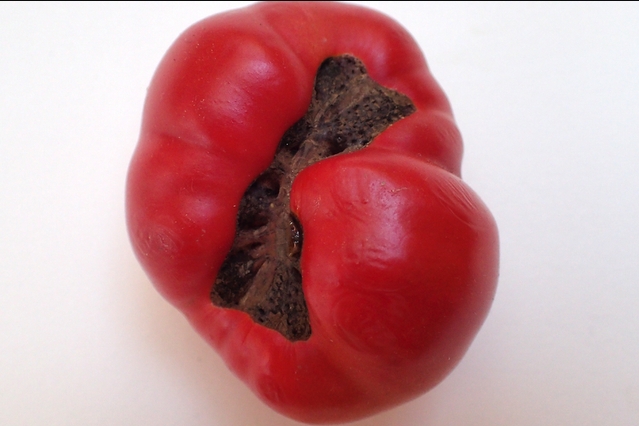
Blossom end rot is a very common problem on green and ripe tomatoes. It first appears as a sunken, brownish black spot 1⁄2 to 1 inch in diameter on the blossom end of the fruit. Blossom end rot is caused by a calcium deficiency that is related to low levels of calcium in the soil or wide fluctuations in available moisture. To prevent blossom end rot, maintain a steady rate of plant growth without stress. A consistent and ample supply of moisture can reduce the problem by maintaining a steady flow of calcium from the soil to the fruit. Mulching also helps conserve soil moisture. Blossom end rot is more serious when an excess of nitrogen fertilizer has been applied. If blossom end rot occurs, remove the affected fruit so that later-maturing fruit will develop normally.
Fruit Cracking
Fruit cracking is associated with rapid fruit development and wide fluctuations in water availability to the plant. Two types of cracks may develop on tomato fruit. Radial growth cracks extend from the stem area, and concentric cracks encircle the fruit, usually on the shoulders.
Fruit that has reached the ripening stage during dry weather may show considerable cracking if the dry period is followed by heavy rains and high temperatures. Tomato varieties differ considerably in the amount and severity of cracking under climatic conditions. The severity of cracking is determined by rainfall and irrigation amounts, variety, and stage of maturity. As the fruit ripens, the strength of bonding between cells progressively decreases, resulting in more severe cracking.
There are steps you can take to help prevent or minimize diseases. Purchase certified seed. When buying plants, look for cultivars resistant to common diseases. Maintain good air circulation around plants; don't crowd them. Follow proper fertilization and irrigation methods. Rotate crops; never plant tomatoes in the same spot and try a three-year rotation if possible. Remove diseased plant material and dispose of it. Do not compost it.
Photo credit: Tomato affected by blossom end rot by Penn State Master Gardener Program
Give This Delicious Market Sprouts Rainbow Salsa Recipe a Try
from Josephine Quiocho, SNAP-ED NY Educator

Six vegetables, one bowl, zero cooking. This rainbow salsa is proof that eating the rainbow doesn’t have to be complicated.
Ingredients
- 1 cup cherry tomatoes, halved or quartered (about 12–15 tomatoes)
- 1 medium cucumber, diced
- 1 bell pepper, diced
- ½ cup fresh or thawed frozen corn
- 2 radishes, finely diced
- 2 green onions, thinly sliced
- 2 tablespoons chopped fresh cilantro
- Juice of 1 lime
- ¼ teaspoon salt (optional)
- Pinch of black pepper (optional)
Directions
1. Halve or quarter the cherry tomatoes, depending on their size.
2. Dice the cucumber, bell pepper, and radishes into small pieces.
3. Slice the green onions and chop the cilantro.
4. Combine all ingredients in a bowl.
5. Add the lime juice (and salt and pepper, if using) and stir gently.
6. Let sit for 10–15 minutes before serving to allow the flavors to blend.
Find the recipe at SNAP-Ed NY: https://snapedny.org/recipes/market-sprouts-rainbow-salsa/


Last updated August 13, 2026

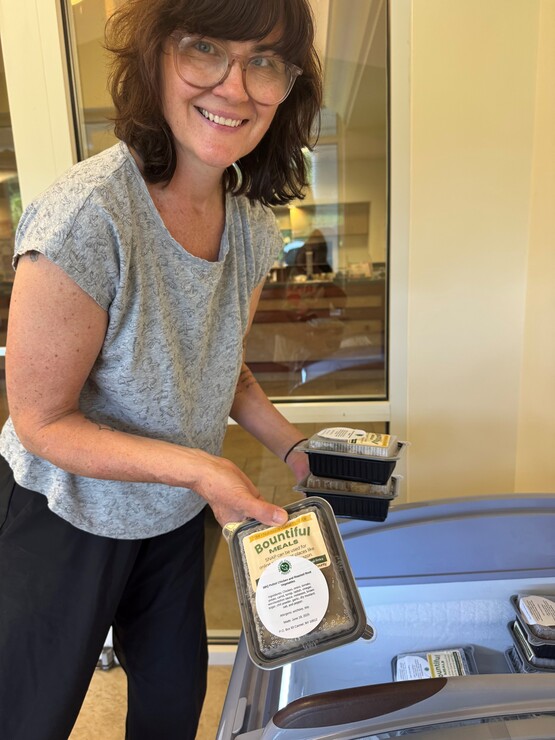
Heather O'Flynn, Food Systems Volunteer
Heather has been a food systems volunteer for a few years. She delivers our frozen Bountiful Meals from Second Chance Foods to freezers in the county.
A resident of Carmel, Heather is originally from New Jersey. She works in marketing and is raising two wonderful children, a puppy and five chickens.
In her free time, she enjoys gardening and spending time with her family.
"I am a strong believer in giving back to the local community and setting a positive example for my children," she said. "Through my volunteer work, I have learned about the many vital programs available to residents of Putnam County, which motivates me to help sustain these initiatives."
The most rewarding part of volunteering, according to Heather, is "meeting and getting to know the individuals who benefit directly from the food programs."
She highly recommends volunteering with CCE Putnam. "They manage several essential programs and are always in need of support," she said. "Providing food and groceries to those in need is only one of the ways CCE shows up for the community."
August Is ...

American Adventures Month
Founded in 1984 by American adventurer Peter Kulkkula, American Adventures Month is a month-long celebration promoting travel, relaxation and nature exploration in the Americas. Activities can range from hiking national parks to visiting historical landmarks. Consider exploring the waters close to home—kayak on the Hudson, paddleboard on one of our many nearby lakes or search for shells along the beaches on the Long Island Sound. Visit a national park like theAppalachian Trail or the birthplace of President Franklin D. Roosevelt—with an America the Beautiful Pass, you can access more than 2,000 recreational sites across the country including national parks, forests and wildlife refuges. Take a road trip close to home—from picking fresh ripe berries at a pick-your-own fruit farm to gazing at amazing sculptures at Storm King Art Center there are plenty of ways to celebrate American Adventures!
Source: National Geographic

National Goat Cheese Month
August is the perfect time to celebrate the unique flavor and versatility of goat cheese. It's an opportunity to explore different varieties, experiment with recipes, and appreciate the artistry of cheesemakers. Goat cheese can be found at grocery stores, specialty cheese shops and farmers markets.
Source:NC State Extension

National Wellness Month
Celebrate National Wellness Month during the entire month of August. It's time to prioritize your self-care, reduce stress, and create healthier habits to feel like your best self! National Wellness Month was born out of the idea that if we are going to do big things in the world, we need to take care of ourselves, too. Start by taking small steps–drink more water, take walks, listen to music, try relaxation exercises.
Source: SNAP-Ed NY
Putnam’s Community Health Improvement Plan is Completed
from Putnam County Department of Health
After nearly six months of preparation and discussions with community members, a plan to improve the health of Putnam County residents has been completed. It was posted on the health department website and submittedto New York State on June 29. The final 15-page document outlines three chosen priorities, paired with selected interventions, that will be tracked and reported on annually to the state health department.
“We wanted to gather input from as many of our residents we serve as possible,” said Putnam County Public Health Director Rian Rodriguez, MPH. “It was important to listen to many different voices and ensure that individuals who face special challenges were heard. Our staff travelled all around the county and talked with individuals about the greatest health concerns they have—for themselves, their families, and their communities. We thank everyone who took part to make this work so meaningful.”
Putnam County Executive Kevin Byrne praised the work of the health department, as well as the combined efforts of the Departments of Mental Health, Social Services & Youth Bureau, and the Office for Senior Resources. He said, “This cycle of community health improvement planning confirms the critical need to support our ongoing county mental health initiatives, which we've already backed through strategic funding adjustments." Putnam County generally does well when it comes to independent health rankings. However, with the work put in place by this plan and the joint vision of our health department and its partners, we can take it to the next level and Putnam residents will reap enhanced health benefits.”
The five areas that mattered most to community members were the same as those selected by key stakeholders from community-based partner organizations, with variations only in selection order. They were economic stability, mental health and suicide prevention, childhood preventive services, healthcare access, and healthy eating and food access. After analyzing and synthesizing the input with guidance from the NYS Prevention Agenda 2025-2030, the three chosen priorities for Putnam County were poverty/economic stability, anxiety and stress, and healthy children/preventive services.
Once the priority areas came into focus, health department staff and leadership discussed the feasibility and impact of Prevention Agenda-guided interventions to address each area. Formalizing referral pathways to both the Department of Social Services and the Office for Senior Resources has both high feasibility and impact to address poverty by cross training health department staff on the services of these agencies. The intervention selected to reduce anxiety and stress is to implement and promote Mental Health First Aid courses throughout the county. While already offered through the Department of Mental Health in Putnam County, the number of available facilitators will be increased by training health department staff to conduct sessions. This will allow more trainings to be offered to the people who live and work in Putnam.
For the preventive services priority, increasing rates of adolescents who complete the HPV vaccine series was selected. Activities here will be twofold and focus on reducing cancer risk. First, a social media campaign targeting areas with low vaccination rates will be conducted. Next, provider-directed activities will include enhancing practice support through various methods such as educating providers and launching a system of vaccine reminders.
“While the state requires that we select and report to them on three priorities, we have other important health challenges in our county and numerous health promotion programs at the health department. And we continue to work on and enhance these programs as well,” said Shanna Siegel, RN, public information officer for the health department, and supervising public health educator. Her health education staff spearheaded planning and on-the-ground efforts to gather input from all corners of Putnam County. Among other identified issues that the department continues to focus on are alcohol and tobacco use, food access and healthy eating, healthcare access, maternal child health and tickborne disease.
The mission of the Putnam County Department of Health is to improve and protect the health of the Putnam County community. The department, nationally accredited by the Public Health Accreditation Board (PHAB) through2029, serves a community composed of nearly 100,000 residents. Core services are provided through a lens of equity, and include community health assessment, disease surveillance and control, emergency preparedness, environmental health protection, family health promotion and health education. For more information, please visit the County website at http://www.putnamcountyny.gov or our social media sites on Facebook, X and Instagram @PutnamHealthNY.
Resources:
- New York State Department of Health – Prevention Agenda 2025 -2030https://health.ny.gov/prevention/prevention_agenda/2025-2030/
- Putnam County Department of Health – 2025-2030 Community Health Improvement Plan and 2025 Community Health Assessment https://www.putnamcountyny.gov/health/community-health#Assessments
Revised Restrictions Allow Rescue Pets Into New York State
from New York State Department of Agriculture and Markets
The New York State Department of Agriculture and Markets (AGM) announced it has revised its import restrictions for pets coming into New York State following the detection of the New World Screwworm (NWS) in Texas and New Mexico.
The updated import order allows the movement of cats and dogs from impacted areas or suspected impacted areas into New York so long as they have been provided an FDA-approved treatment within 14 days prior to entering the state. The remaining order is still in effect and can be found here.
State Agriculture Commissioner Richard A. Ball said, “The Department continuously evaluates its policies and animal health regulations to ensure it is responding proactively to any animal health threats and protecting the agricultural industry. We still urge our livestock producers to watch for signs of illness in their animals and take preventative measures, such as tightening biosecurity on the farm and implementing on-farm conservation practices. Taking these extra steps now are critical to protecting animal health.”
New York’s importation order also outlines requirements for additional veterinary testing, certification of good health, and preventative treatment of animals from impacted areas. Specifically, it requires that no domestic animal originating from an infested area enters the state until the area is declared free of the NWS, and that the animal has been examined by an accredited veterinarian and found free of the infestation. The order issued by AGM can be found here.
NWS poses a serious threat to livestock, pets, wildlife, and in rare cases, people. The larvae feed on living tissue and can cause severe wounds, animal suffering, and significant economic harm if not detected and treated quickly. To stay up to date with the latest NWS cases, visit the USDA website here.
According to the USDA, there is no concern about food safety, and the country’s food supply remains safe. The current risk to animals and people in the United States is also very low. AGM is coordinating with the New York State Department of Health and the Department of Environmental Conservation to monitor the situation and ensure state agencies are aligned in the event NWS is introduced in New York.
New York State Department of Environmental Conservation Commissioner Amanda Lefton said, “Actions to prevent the spread of this destructive parasite are far more effective and less costly than responding after it becomes established. These preventative regulations will help safeguard not only livestock and pets, but also the wildlife populations and natural ecosystems that are central to New York’s environmental and economic well-being.”
Out of an abundance of caution, the Department is also urging livestock producers and pet owners in New York to remain vigilant for symptoms of NWS in their animals, which includes:
- Draining or expanding wounds
- Maggots or eggs, especially around the navel, nose, and ears
If a producer or pet owner suspects NWS infection, they should contact the New York State Department of Agriculture and Markets at 518-457-3502.
In addition, the Department is also asking livestock producers to strengthen biosecurity measures on their farm, and to follow the United States Department of Agriculture’s (USDA) recommendations to implement on-farm conservation practices.
Additional information on NWS and proactive measures producers can take can be found on USDA’s website at: https://www.aphis.usda.gov/animals/animal-health/livestock-and-poultry-disease/stop-screwworm.

CLICK HERE and become a part of our efforts
to build our new home at Tilly Foster Farm!
Tidbits
Students and Teachers Build Healthy Habits With Nutrition Education
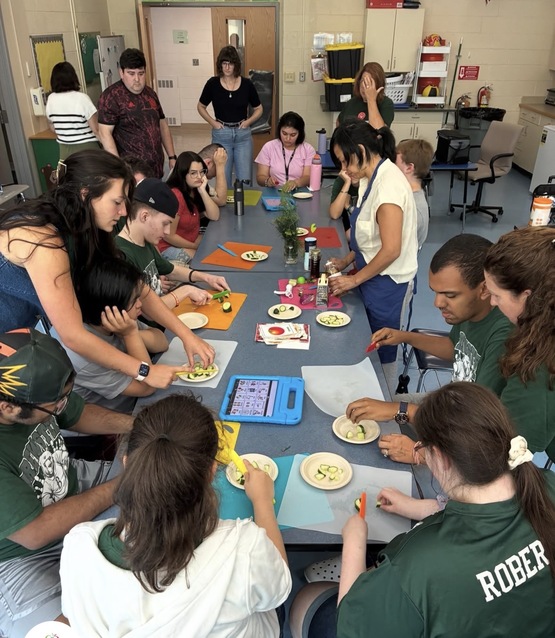
This summer, students in Brewster Central School District's Special Education and Career Skills summer program are discovering that healthy eating can be both fun and delicious. Through Harvest NY's Rooted in Learning Farm-to-School Initiative, Jo from Cornell Cooperative Extension of Putnam County is leading hands-on nutrition education with multiple student groups from 2nd grade through high school. The six-session series combinesinteractive cooking experiences, food exploration, and nutrition lessons that help students build confidence in the kitchen while developing lifelong healthy habits.
Each week, students learn culinary skills paired with important nutrition concepts and delicious tastings. Students kicked off the program by practicing knife skills while preparing a colorful fruit salad and learning the benefits of "eating the rainbow." They then explored the spectrum of whole to processed foods by transforming fresh cucumbers into homemade pickles. Another session focused on whole grains as students examined food packaging to identify whole grain ingredients before preparing Cranberry Oatmeal Balls. Most recently, students created yogurt parfaits while learning about the importance of calcium and vitamin D in building strong bones.
Although the summer program is still underway, its impact is already evident. Students, teachers, and classroom aides alike have shared that they've recreated many of the recipes at home, and teachers are already asking to expand the program into the school year. By making healthy eating approachable, hands-on, and fun, the program is equipping participants with practical culinary skills and the confidence to make nutritious choices that extend beyond the classroom.
At a Glance ...
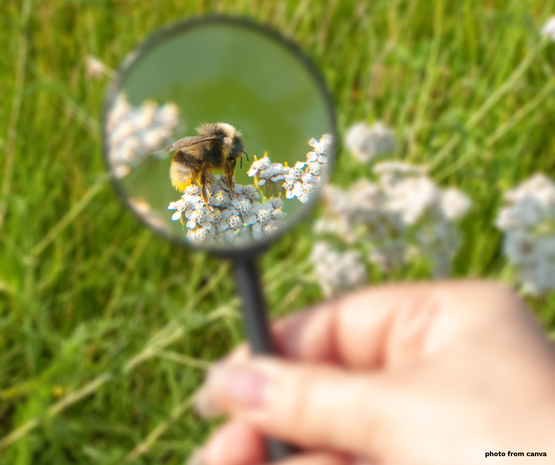
Insecta-palooza
Saturday, Aug. 22
11 a.m. to 3 p.m.
R&R Forest, Tilly Foster Farm
100 Route 312, Brewster
Help us count and identify as many insects as we can in 4 hours!
We’ll have an insect scavenger hunt for kids. Insect experts will be on hand, and we’ll have insect specimens for children and adults to learn from.
This project helps us expand our nature catalog for the Restore and Regenerate Forest at Tilly Foster Farm in Brewster. As the forest restoration grows, nature cataloguing will help us identify how many more insects use the forest habitat for their home.
This event is held in conjunction with Soldiers2Scientists, an organization that engages veterans and their families in citizen science.
Fee: Free
Register HERE.

Managing Spotted Lanternfly at Home
Friday, August. 7
Noon
Online
About our "What's Bugging You?" series
Each month at New York State Integrated Pest Management's "What's Bugging You? First Friday" events, experts share practical information and answer questions on using integrated pest management (IPM) to avoid pest problems and promote a healthy environment where you live, work, learn and play. We end with an IPM Minute, and cover a specific action you can take in the next few days to help you avoid pest problems.
See the What's Bugging You? Page for more events.
Fee: Free
Register HERE.
.png?1777316584)
Agritourism Webinar Series
Through Dec. 8
12 to 1 p.m.
Online
Join the Cornell Cooperative Extension Agritourism Program Work Team for a monthly webinar series designed to support both new and established agritourism operators.
This educational series provides practical guidance, timely tools, and real-world strategies to help farms strengthen agritourism operations, manage risk, enhance visitor experiences, and improve long-term business sustainability.
Webinars are held on the second Tuesday of each month from 12-1 p.m.
2026 Webinar Schedule:
- August 11: Agritourism on Dairy Farms
- September 8: Hosting Kids Camps
- October 13: Understanding Agricultural Assessments
- November 10: Using Online Platforms
- December 8: Deep Dive into Agritourism Insurance
Webinars made possible through funding from the USDA NIFA Beginning Farmer and Rancher Development Program.
Fee: Free
Register HERE.

Business Development and Marketing Monthly Webinar Series
Through Dec. 15
12 to 1 p.m.
Online
Join Cornell Cooperative Extension for a Business Development and Marketing Zoom series. These monthly webinars will take place on the third Tuesday of each month and focus on a variety of business development and marketing topics. All sessions will be led by content experts across the Cornell Cooperative Extension system, organizations and businesses which support agricultural operations across New York State. The list of topics and dates are listed below:
- August 18: Produce Auctions: Are They Right for Me?
- September 15: Grant Writing 101
- October 20: Business Structures 101 with COUGHLIN & GERHART, LLP
- November 17: How to Evaluate Market Opportunities
- December 15: Overview of Market Channels & Requirements for Participation
Fee: Free
Register HERE.
2026 Cut Flower Webinar Series
Through Dec. 16
12 to 1 p.m.
Online
Cornell Cooperative Extension’s Cut Flower Program Work Team invites cut flower growers to join a free monthly webinar series focused on practical, research-based strategies to support successful production. All webinars will be recorded.
Pre-Registration Required.
- August 19: Analyzing Soil Test Results and Calculating Fertilizer Needs
- September 16: Mischievous Mildews
- October 21: Forcing Tulips
- November 18: Growing Gorgeous Dahlias the Regenerative Farmer’s Way
- December 16: High Tunnels: Ranunculus and Anemones.
All webinars will be recorded and links shared.
Fee: Free
Register HERE

DEC Releases 2026-2030 Hudson River Estuary Action Agenda
Five-Year Blueprint Outlines Strategies to Protect and Enhance the Hudson River Estuary
from NYS Department of Environmental Conservation
The New York State Department of Environmental Conservation (DEC) released the Hudson River Estuary Action Agenda 2026-2030, a five-year blueprint for conserving and restoring the Hudson River estuary and its watershed. The 2026-2030 plan builds on the successes of the previous Action Agenda while incorporating new scientific findings and addressing emerging challenges. The eight priority goals focus on creating a strong and vibrant ecosystem that benefits both nature and people, with special emphasis on environmental justice, equity, and inclusion, as well as meaningful Indigenous engagement.
"The Hudson River Estuary Action Agenda 2026-2030 represents New York’s commitment to protecting the Hudson River Estuary and its watershed for present and future generations," Commissioner Amanda Lefton said. "This Action Agenda establishes goals that address complex environmental challenges including climate change, while ensuring that communities throughout the Hudson Valley have clean water, resilient shorelines, and equitable access to the river. We are grateful to our many partners and stakeholders for providing input on this plan and working collaboratively with DEC to ensure a healthy and thriving estuary ecosystem."
The Action Agenda is updated every five years to address current trends and opportunities and sets objectives that can be achieved through collective action and collaboration among government and nongovernmental partners. It includes specific, measurable outcomes that are achievable by 2030 and identifies strategies for State agencies and partners to implement between 2026 and 2030.
Highlights of the 2026-2030 Action Agenda include:
- Vital River Ecosystem: Strategies to ensure robust fish populations, protect river habitats, and maintain clean water suitable for swimming, recreation, and drinking water;
- Thriving and Resilient Watershed: Actions to maintain healthy tributaries, support climate-adaptive communities, and conserve priority natural areas; and
- Living Well with Nature: Programs to inform and engage the public and ensure accessible Hudson River experiences for all people.
The Hudson River Estuary Management Program, created in 1987, helps protect, conserve, restore, and enhance the Hudson River estuary and its watershed, and encompasses four DEC programs that work collaboratively to implement the Hudson River Estuary Action Agenda:
- The Hudson River Estuary Program
- The Hudson River National Estuarine Research Reserve (HRNERR)
- The Hudson and Delaware Marine Fisheries Unit
- The Marine Habitat Program of DEC’s Division of Marine Resources

Getting Back Into the School Groove
By Jane Riffe, retired WVU Extension Specialist in Family and Human Development
The beginning of school means changes from the “free-flowing” days of summer to regular daily routines. Though these August to September changes are predictable, the transition can be rough for adults and children, especially young children. Here are some tips to help boost your children’s attitude, confidence and school performance.
- Re-establish school time biorhythms. Get back into regular bedtime and mealtime (especially breakfast) routines.
- “Where is my backpack?” Select a spot by the door to keep backpacks, lunch boxes and school supplies. Enlist your child’s help in setting up a “homework zone." Teach your child to clean up his homework area every evening after homework is complete. Books and homework placed inside backpacks, and backpacks placed near the door help eliminate rushing around in the morning.
- Minimize clothes shopping woes. Buy only the essentials. Summer clothes are usually fine during the earlyfall, and be sure to have at least one pair of sturdy shoes. Confirm dress code guidelines.
- Good physical and mental health. Discuss any concerns you have about your child’s emotional or psychological development with their pediatrician.
- Clear your own schedule for the first few weeks of school. Be free to help your child adjust to the school routine and overcome the confusion or anxiety that many children experience.
- Parent papers need a place, too! Pick a place to deal with forms sent by the school and read it as soon as it arrives.
- Turn off the TV and put away electronics and phones. Encourage your child to play quiet games, do puzzles, flash cards, color or read as early morning activities instead of watching television.
- Most important tip of all–take time to listen: Invite your child to talk about her or his day and then practice active listening to their thoughts and feelings to show interest and curiosity, rather than judgment, about their school experiences.