Happenings November 2026

November 2026
Supporting Healthy Forests: Deer Hunting Season and Population Management
by Savannah Fox, Natural Resources Program Coordinator
As autumn arrives across New York State, deer hunting offers an opportunity to reflect on an important part of natural resource conservation: managing white-tailed deer populations to support healthy, resilient forests.
Deer are a natural and important part of our ecosystems, but when populations exceed what the landscape can sustainably support, the effects can be far-reaching. Excessive browsing can prevent native tree seedlings and wildflowers from growing, reduce plant diversity, and limit the ability of forests to regenerate. These changes can also affect wildlife that depends on diverse native vegetation for food and shelter. In some areas, high amounts of deer may contribute to conditions that favor invasive plants and can influence the abundance of ticks that carry Lyme disease.
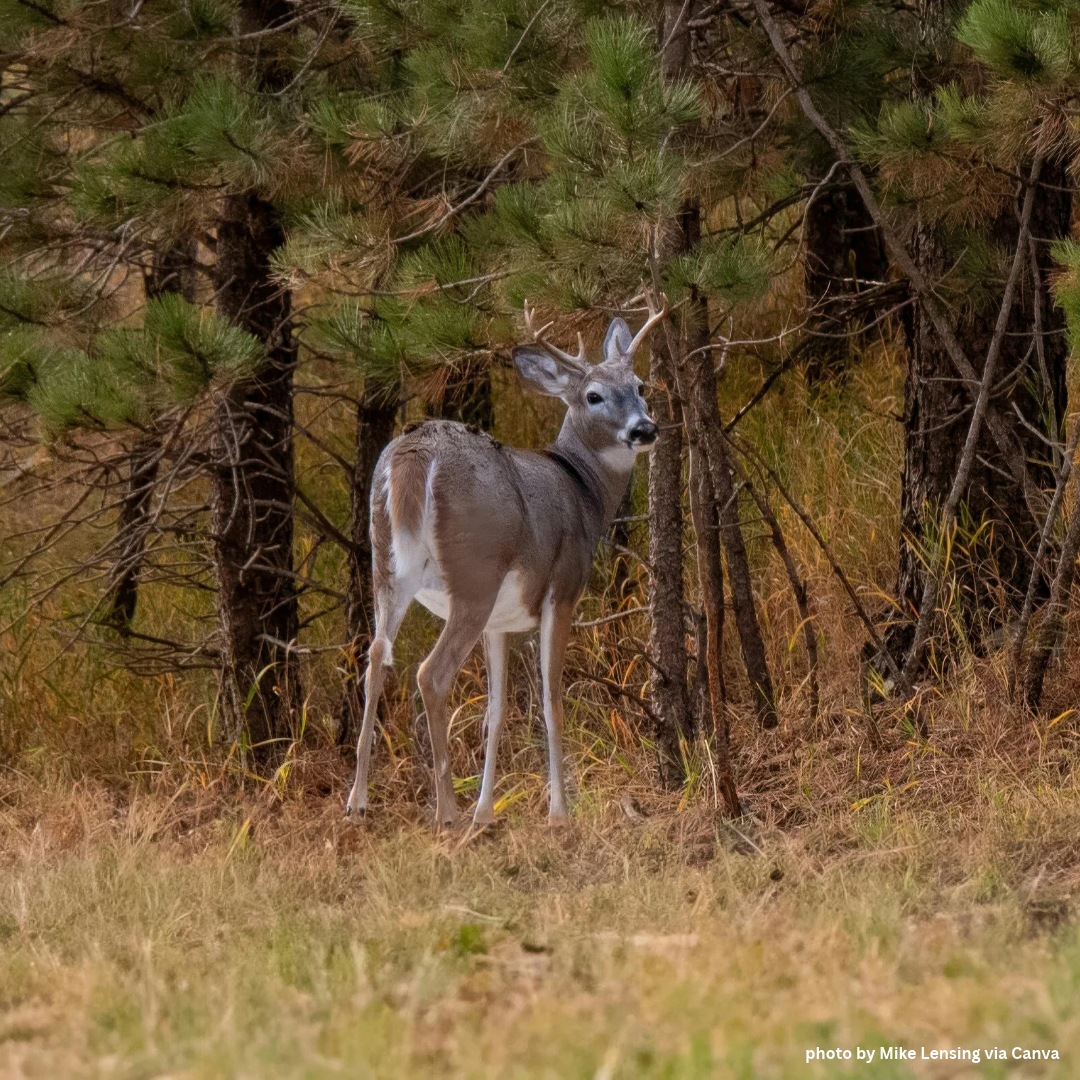
Responsible deer management is one tool that land managers and conservation professionals use to help maintain ecological balance and protect the natural areas our communities depend on for wildlife habitat, clean water, and general safety.
What to Know About New York's Deer Hunting Season
The New York State Department of Environmental Conservation (DEC) oversees hunting regulations and deer management throughout the state. Big game hunting seasons vary by species, location, and hunting method, with many deer hunting opportunities occurring during the fall and early winter.
The DEC has also adopted new regulations intended to increase the harvest of antlerless deer, which are primarily female deer and play a central role in population growth. These measures are designed to give hunters additional opportunities to help manage deer populations in areas where they are higher than the landscape can sustainably support.
One of these measures is the statewide “Earn-a-2nd-Buck” system. Under this system, hunters who harvest and report an antlerless deer using a valid antlerless deer tag can qualify to receive an additional antlered deer tag, subject to applicable DEC requirements. The state has also expanded opportunities to use Deer Management Permits in areas where additional population management is needed.
Anyone interested in hunting should consult the DEC's current regulations for the applicable season dates, locations, permits, and requirements.
Protecting Forest Regeneration at Tilly Foster Farm
Here in Putnam County, deer management is also an important consideration in our local conservation work. Hunting is one tool used to manage deer populations, but protecting forest regeneration can also require site-specific measures. Deer exclosures, for example, prevent browsing in designated areas and allow land managers to assess how vegetation responds when deer pressure is reduced. At Cornell Cooperative Extension Putnam County (CCEPC), our Restore & Regenerate Forest project at Tilly Foster Farm is working to restore approximately one acre of forest and support the long-term regeneration of a diverse, native woodland.
To prepare the site for restoration, we have worked with contractors to remove more than 90% of the invasive plant cover across the project area. Our next steps include installing a deer exclosure - a protective fence designed to keep deer out - and planting the first section of the restoration site in spring 2027.
Over the next 5 years, we’ll plant over 500 trees, helping establish the next generation of forest vegetation. Protecting these young plants from deer browsing will be essential to giving them a chance to survive and grow. Over time, monitoring vegetation inside and outside the exclosure can help us better understand how deer browsing affects forest regeneration and which native species are successfully establishing at the site.
Our long-term vision is to support the regeneration of an Appalachian oak-hickory hardwood forest, including the native understory plants that contribute to a healthy and diverse ecosystem. As mature trees age and eventually die, successful forest regeneration helps ensure that new generations of trees and other native plants are ready to take their place. Healthy forests provide habitat for wildlife, support local water quality, help forests withstand environmental stressors, and create opportunities for people to connect with nature.
The Restore & Regenerate Forest project also serves as a community research forest, where our visitors can learn how to support healthy forests through citizen science and hand-on learning. By restoring native vegetation and protecting new growth, we hope to create a living example of how land stewardship can benefit both the environment and the people who enjoy it.
Want to learn more about identifying native tree seedlings and exploring local biodiversity? Join us on November 14 for a Nature Journaling and Biodiversity Scavenger Hunt! Together, we’ll explore the forest, observe and identify plants, wildlife, and other natural features, and learn how to capture our observations in a nature journal. All interest and skill levels are welcome!
Learn More:
Deer and Bear Hunting Regulations — NYS DEC
Why We Manage Deer — Cornell Botanic Gardens
Appalachian Oak-Hickory Forest — New York Natural Heritage Program
Bug of the Month: Goldenrod Gall Fly
by Janis Butler, Master Gardener Volunteer
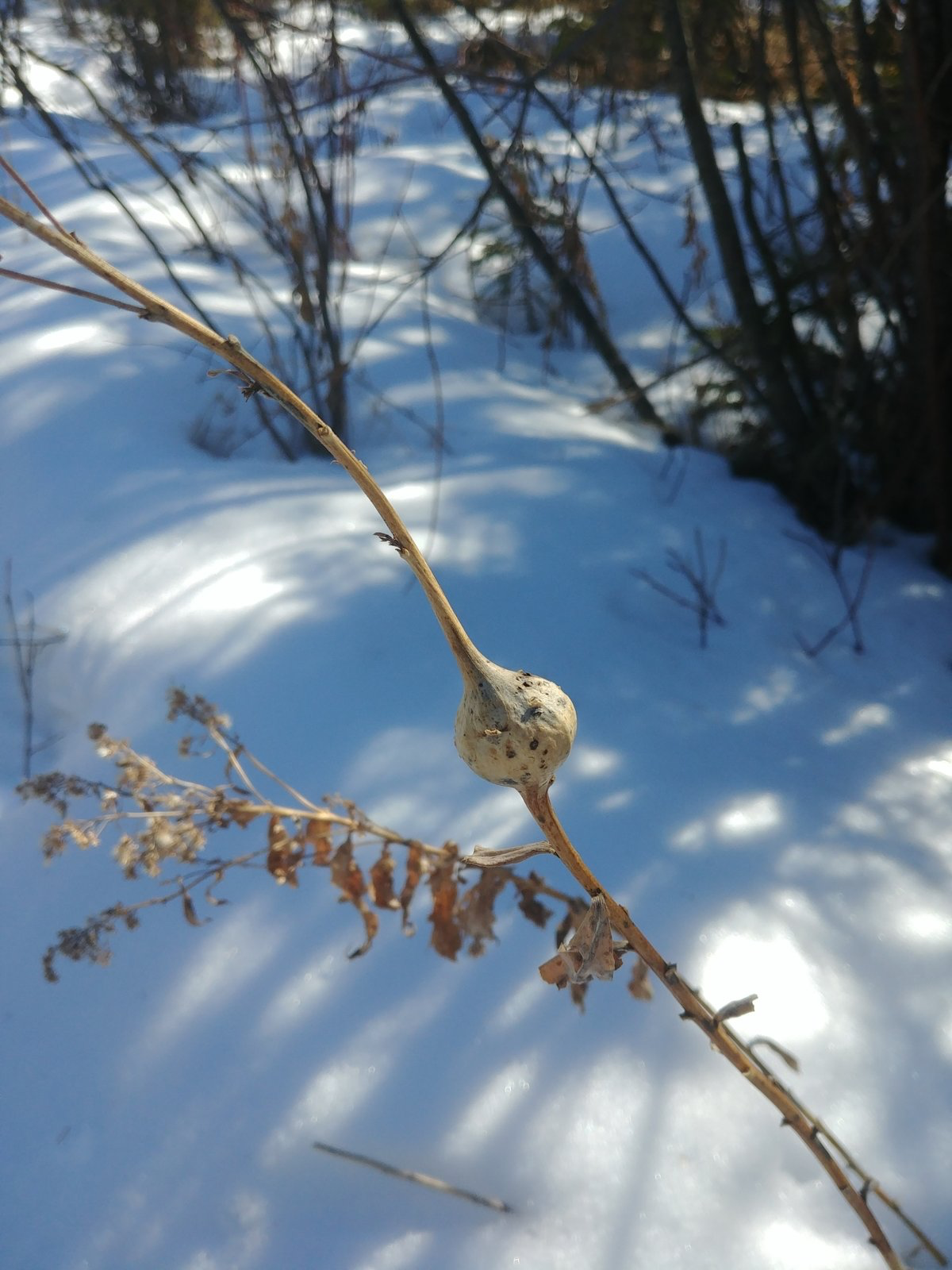
Did you ever play with ‘noggin knockers’ as a kid? The ‘knockers’ are galls: dry, corky balls found on goldenrod stems in fall and winter. If you snap off a stalk of goldenrod near its base and again just above the gall, you have a small, stiff club with which to chase other children around as you knock one another on the noggin.
What is a gall? It’s an abnormal growth or swelling of plant tissue, stimulated by what the plant perceives as a threat. This threat could be an insect, mite, fungus, bacteria, virus, or other agent who uses the gall in various ways: as a food supply, for example, and/or as protection against weather and predators. Galls rarely cause serious harm to the host and can appear on almost any part of a plant: leaves, twigs, stems, flowers, or even roots. They come in many shapes and colors, sometimes vibrant, taking the form of balls, as in the goldenrod gall; spikes, fingers, and other variations.
The story of the Goldenrod Gall Fly (Eurosta solidaginis, fruitfly family) begins in spring, when the flies emerge from last year’s galls and look for mates. The male fly stakes out a position at the tip of a goldenrod and makes himself highly visible. He might wander around on the stem, laying down chemical pheromones as an additional sign of his presence. When a female approaches, he rocks rapidly from side to side, flicking his wings to attract her attention… a courtship dance.
Once they mate, the female begins her search for the perfect plant on which to lay her eggs. There are 100 to 150 species of goldenrod in the world, most of them in North America. The exact number is elusive since they often hybridize in the wild. The Goldenrod Gall Fly chooses only Common Goldenrod (Solidago canadensis), Tall Goldenrod (S. altissima), or Giant Goldenrod (S. gigantea) for egg-laying because these species are biochemically compatible with her larvae when they hatch, meaning these species are all the larvae are equipped to eat. She uses chemical sensors on her feet and antennae to “taste” each plant before making her choice. She lays a few eggs in each goldenrod’s terminal bud —100 to 200 eggs in her short lifetime — but usually only one or two result in galls on a single plant. Goldenrod Gall Flies only live about 10 to 14 days as adults, the rest of their lives being spent inside the gall as egg, larva and pupa.
Each egg hatches in 5 to 8 days and the emerging larva chews its way to the center of the stem and down. The presence of its saliva alerts the goldenrod, which reacts by forming a gall.
What happens in the goldenrod gall? When the plant senses an invader — the gall fly larva— it sends additional stem material, which happens to be rich in protein and starch, to protect the area. The invading fly larva enjoys this food supply and the protection the gall provides. As the fly larva matures, it feeds off the inner wall of the stem, and the plant compensates for this loss by continually sending replacement nutrients to the area. As this process continues, the walls of the stem bulge out and form a green ball — the gall — which dries out and turns brown and tough-skinned in fall.
As winter approaches, the fly larva has an important task to perform: preparing its exit. It continues eating plant tissue, this time while chewing its way back toward the outer skin of the stem and in so doing, enlarging an exit passage wide enough for its larger self. This is especially important because its soon-to-beadult self will lack mouthparts. Adult Goldenrod Gall Flies do not eat during their two-week-long lives. The larva leaves a thin layer of skin on the outside of the gall. Then it crawls back to the center of the stem and, like many insects, produces intra-cellular “anti-freeze”, consisting of glycerol and sorbitol, to prevent its internal organs from freezing as it rests for the rest of the winter.
In spring, the larva “wakes up” from this state of diapause and pupates. When ready to emerge as an adult, it crawls back through the tunnel it made the previous fall and inflates a swelling "balloon” on its head, much like the eggtooth on a chick. The tough balloon bursts through the outer layer of gall skin and the fly emerges as a fully-formed adult Goldenrod Gall Fly and begins looking for a mate.
Not-so-ideal life. If events from egg to adult proceeded as described above, life would be perfect for the Goldenrod Gall Fly, though we might find ourselves overrun by them. Unfortunately for the fly but fortunately for balance in our ecosystem, the Goldenrod Gall Fly has enemies, especially in the larval stage. There are two main waves of attack.
Summer attackers include parasitoid wasps. The female of one wasp species (Eurytoma obtusiventris) inserts her ovipositor directly into the egg or embryo of the Goldenrod Gall Fly, laying an egg while the fly is still in the goldenrod bud. The wasp egg, now inside the fly egg or embryo, stays dormant as the fly egg hatches into a larva and begins its journey down the center of the plant stem. Once the fly larva has triggered the formation of a gall, the wasp, now at its own larval stage, becomes active and consumes the fly larva from the inside out.
Another species of wasp, working after the gall has begun to form, uses her ovipositor to pierce the still-thin outer wall of the gall and lay an egg directly inside the chamber. Once hatched, her larva, too, devours the Goldenrod Gall Fly larva. Both of these wasps’ ovipositors are just long enough to reach inside the smallish early-season galls. Fly larvae inside large, thick, older galls are generally safe from them.
In winter, there are a host of hungry birds who consider the tender gall fly larvae, much bigger by now, a treat worth working for. Black-capped chickadees, tufted titmice, and downy woodpeckers are especially eager to drill holes in the tough skin of the galls and extract the grubs. They prefer larger galls, despite the thicker skins, because they’re easier to spot and are likely to contain fatter grubs: a more gratifying meal. Close observers can tell which bird species has been drilling based on the size and shape of the hole.
Biologists call this balance between small galls preferred by parasitoid wasps and large galls preferred by birds the Goldilocks evolutionry effect: the striving for “just right”. The conflicting pressure favors flies that produce medium-sized galls: thick enough to discourage parasitoid wasps but small enough to escape the attention of hungry birds.
Goldenrod Gall Flies benefit one additional preditor: the human fisherman. Ice fishermen are particularly eager to break open the galls and find plump, juicy larvae even in sub-zero temperatures, thanks to the larvae’s natural “antifreeze”. They’re quite resilient on a fishing hook and effective bait for fish such as bluegill, perch, and crappie.
The Goldenrod Gall Fly is a good example of an insect that does not fit the human-centric definition of “beneficial” (except to fishermen!) but is of great importance in its community, providing sustenance and shelter to other species and hereby contributing to balanced ecosystems.
Photo credits: Goldenrod Gall Audiala (CC0 1.0 Universal)
Pantries Bridge The Gap When Families Face Food Aid Uncertainty
by Ruby Koch-Fienberg, Ag & Food Systems Coordinator
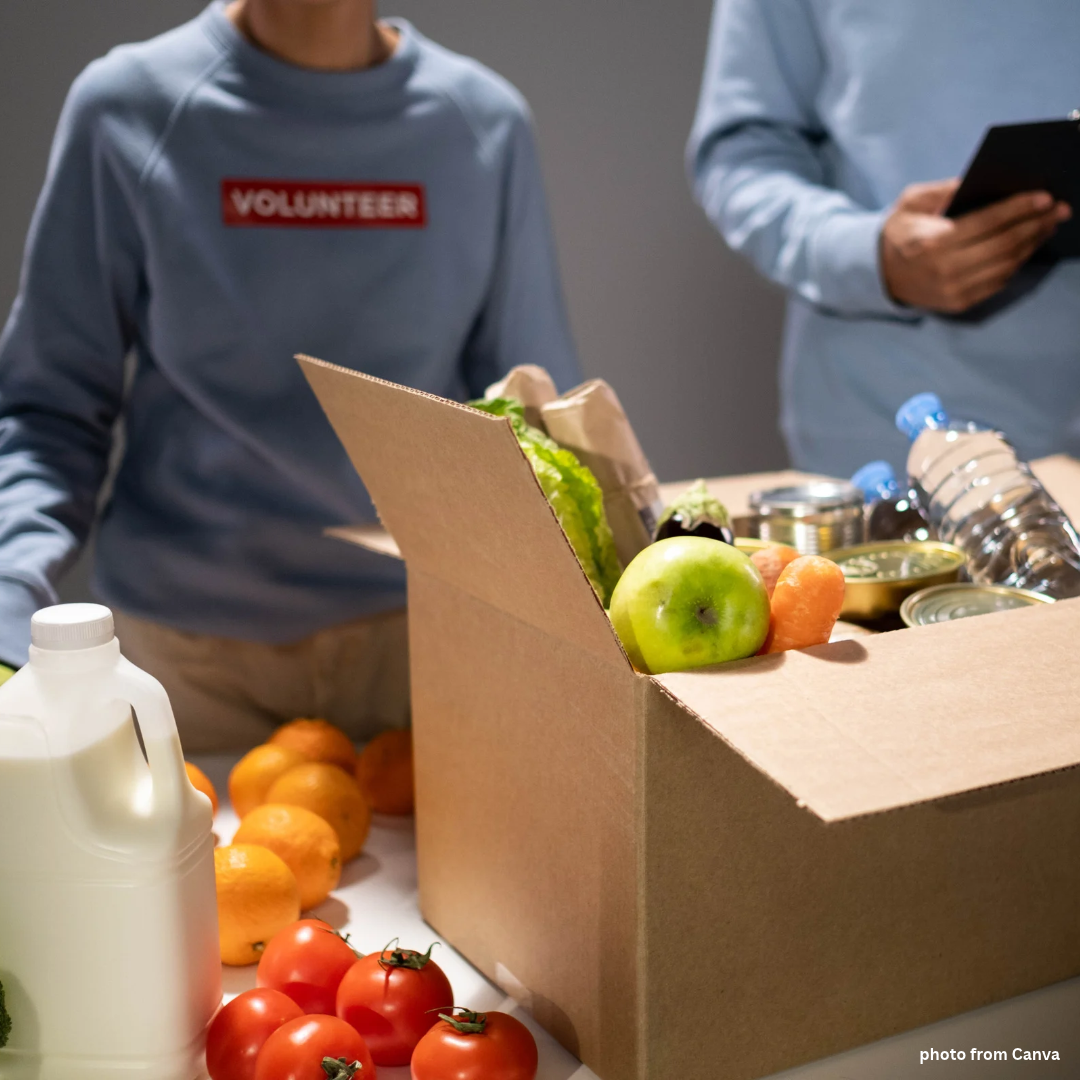
During the holiday season, the struggle to put a meal on the table becomes even heavier for families feeling financial struggles. In 2023, 12,823 households—making up 37 percent of Putnam County’s population—fell below the ALICE (Asset Limited, Income Constrained, Employed) threshold, meaning more than one in three of our neighbors struggles daily to cover basic living costs.
As the holidays approach, festive gatherings and winter expenses make this strain much harder to bear. If you are looking for the closest pantry to access resources, you can find an updated list HERE.
At Cornell Cooperative Extension Putnam County, we are committed to strengthening our local food system, but we urge everyone: please support your local pantries, which will be pivotal in helping families bridge the gap during this crisis.
Donating money, toiletries, and basic essentials makes an immediate impact—before bringing food, always check your pantry’s website or call to see what's most needed, as priorities may change. Together, we can address urgent needs and help our neighbors weather this incredibly difficult moment.
Bountiful Meals freezers across the county are available to anyone. Click HERE to see the locations and hours.
Below is a list of food pantries in our area:
- Putnam Community Action (CAP), Brewster: (845) 278-8021, www.putnamcap.org
- First Baptist Church Brewster: (845) 279-2636, www.putnamcap.org
- Putnam Valley Community Food Pantry: (845) 458-1251, www.putnamvalleyfoodpantry.org
- Casa Servir, Kent: (845) 221-8785, www.casaservir.com/
- Brewster Community Food Pantry: (845) 279-4325, www.facebook.com/brewsterfoodpantry/
- Gilead Food Pantry, Carmel: (845) 225-4586, https://gileadchurch.org/food-pantry/
- Patterson Community Church: (845) 878-3961, https://pattersoncommunitychurch.org/food-pantry/
- New Life Christian Church, Brewster: (845) 278-9407
- First Presbyterian Church, Cold Spring: (845) 265-3220, www.presbychurchcoldspring.org/food-pantry.html
- Community Food Pantry at St Mary's, Mohegan Lake: (914) 528-3972, www.cfpstmarysmoheganlake.com
- St Peter's Episcopal Church, Peekskill: (914) 737-6312, https://www.stpeterspeekskill.org/freds-food-pantry
- Red Mills Baptist Church, Mahopac: (845) 628-4230, www.redmillsbaptist.org
- Holy Spirit Food Pantry, Cortlandt Manor: (914) 737-2316, https://holyspirit-cortlandtmanor.org/food-pantry
- Brewster Cares: (845) 279-2021, brewstercaresny.org
- St. John the Evangelist, Mahopac: (845) 628-2006 ,https://sjte.online/events/food-pantry
- Feeding Westchester, Jefferson Valley: (914) 923-1100, feedingwestchester.org
- Food Bank of the Hudson Valley, Cornwall-on-Hudson: (845) 534-5344, foodbankofhudsonvalley.org
- Salvation Army Peekskill-Food Pantry/Soup Kitchen: (914) 737-0280, https://www.salvationarmyusa.org/ny/peekskill/nelson-avenue-corps/hunger/
Keep Bacteria and Other Unwanted Guests Away from Holiday Festivities
from Larry Clow, University of New Hampshire Extension
However you celebrate, Thanksgiving is a time for welcoming friends, family, guests, visitors and others into your home for a meal. Whether your hosting philosophy is of the “more-the-merrier” bent or you prefer small, intimate gatherings, you want your guests to feel welcome and be safe.

There is one group you will want to keep far away from your Thanksgiving celebrations: the viruses and bacteria that cause foodborne illnesses. These unwanted guests often appear via flu-like symptoms within 24 to 48 hours after the big meal. Did you catch a cold or flu from the aunt or cousin who sneezed their way through the day? Or is a foodborne illness to blame for your post-holiday maladies? You may never know, but you can reduce the risks by safely handling your holiday meals.
Basic Tips
- Always Be Washing: Wash your hands and all cooking surfaces often. When in doubt, wash.
- Don’t Mix Them Up: Keep raw meat and ready-to-eat foods separate.
- Taking Temperature: Cook meats and poultry to proper temperatures. Use a food thermometer for accurate readings.
- Leftover Love: Some people love leftovers; others don’t. But the best way to show your leftovers some love is to refrigerate them promptly and use within four days.
Turkey Safety
When it comes to Thanksgiving food safety, it’s time to talk turkey. Read and download New Hampshire Extension's Turkey Tips sheet here.
Follow these simple steps to keep the centerpiece of your meal safe.
- Thawing: If you’ve purchased a frozen turkey, be sure to leave enough time to thaw it safely. Thaw your frozen turkey in the refrigerator. Allow about 24 hours for every four and a half pounds of turkey. (A 20 to 24 pound turkey could take five to six days to thaw.) A thawed turkey can safely remain in the fridge for one to two days, as can a fresh turkey. You can find additional thawing facts and methods here.
- Don’t Thaw on the Counter: Taking your turkey out of the freezer on Wednesday and letting it thaw overnight on the counter is not safe. If bacteria were present in the turkey, they can begin to multiply once the turkey reaches room temperature. Never leave meat or poultry to thaw on the counter for more than two hours.
- Safe Stuffing: Cooking the big meal is stressful, but some shortcuts aren’t safe. Don’t stuff the turkey the night before. To save time, prepare wet and dry ingredients separately and chill until you’re ready to prepare and cook the turkey. Stuff the turkey loosely and cook immediately. If you’re still hungry for stuffing safety facts, read these USDA tips.
- Get Cooking: Once preparations are finished, place the turkey in an oven set no lower than 325 F. Use a thermometer to make sure the turkey reaches at least 165 F. Measure with a food thermometer in the thickest part of the bird. If the bird is stuffed, cook until the center of the stuffing reaches 165 F. If your turkey has a “pop-up” thermometer, double-check the temperature with a food thermometer.
- Cool Off: Let the turkey stand for 20 minutes before carving and removing the stuffing.
4-H News: Our Clubs are Off to a Great Start
from Brandy Keenan, 4-H Educator
Our 4-H Clubs are off to a great start!
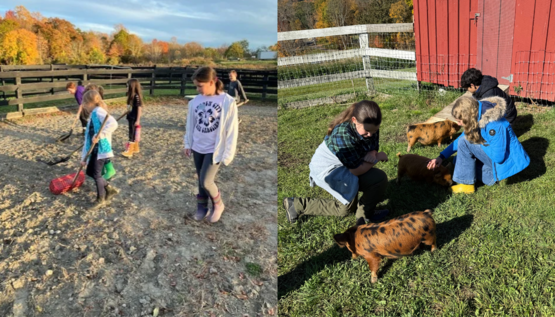
Recently, members learned about cleaning up horse paddocks at Top Focus Jr. Equine Club. Members are learning how to properly care for horses, which includes grooming, stable chores and farm management. Kids in the Hay You! Livestock Club met the piglets at Tilly Foster Farm. They'll meet and learn about all the farm animals at Tilly.
Registration is still open for many of our clubs!
Parents and guardians can register their youth by visiting the 4-H page on our website.
We offer 10 clubs for youth and are excited to have several new clubs this year!
Give Tasty Turkey Lettuce Wraps a Try
from Josephine Quiocho, Nutrition Educator
Turkey Ginger Rice Lettuce Wraps are a healthy and delicious low-carbohydrate meal. They're also gluten-free!

Ingredients
- 3 tablespoons soy sauce (reduced-sodium)
- 3 teaspoons sugar (granulated or brown)
- 2 teaspoons sesame oil
- 1 teaspoon hot sauce
- 3 pounds ground turkey (lean, 15% fat or less)
- 2 celery (stalks, sliced)
- 2 medium carrots (shredded)
- 1 tablespoon ginger root (minced, or 3/4 teaspoon ground ginger)
- 1 teaspoon garlic powder (or 1 clove garlic, minced)
- 1 can water chestnuts (8 ounces, drained and chopped)
- 2 cups brown rice (cooked)
- 8 large lettuce leaves
Instructions
- In a small bowl, blend the soy sauce, sugar, sesame oil and hot sauce.
- In a large skillet, sauté turkey, celery and carrot until the turkey begins to brown, 10 minutes. Break turkey into crumbles as it cooks.
- Add ginger and garlic. Cook 2 minutes.
- Stir in soy sauce mixture and water chestnuts. Cook 2 minutes longer.
- Stir in cooked rice. Heat through.
- Serve in lettuce leaves.
- Refrigerate leftovers within 2 hours.
Source: Oregon State University Extension

Last updated November 1, 2026

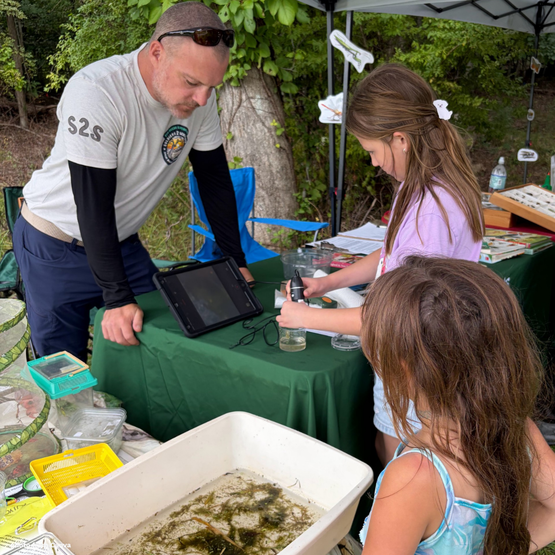
Thank You, Soldiers2Scientists
So many of our programs are done in partnership with wonderful organizations!
Soldiers2Scientists has been working with us in our Restore & Regenerate Forest for over a year. Whether it's exploring the forest and helping us catalog the flora and fauna at Tilly Foster Farm, installing bird boxes and a trail cam or offering educational opportunities to area veterans, Michael Cohn, executive director at Soldiers2Scientists, is always at the ready, bringing endless knowledge and hands-on experience to all of our programs at the forest. His help with programs and projects, and his interest in all things nature have been immeasurable!
Soldiers2Scientists is a nonprofit organization dedicated to expanding veteran participation in outdoor citizen science projects. They partner with park rangers, veteran organizations, conservation groups, universities and a community of donors to organize activities where veterans take part in important research.
Their work began in 2013, supporting veterans seeking engaging outdoor recreation, career advancement or those struggling with post-deployment transitions. Their purpose is to provide goal-oriented volunteer opportunities, believing these projects offer veterans a chance to experience exclusive access to our national parks and public lands while continuing their service to the country in a new way. They offer opportunities such as single-day projects, multi-day expeditions and internships with local universities, scientists and researchers. To learn more, visit www.soldiers2scientists.org.
November is ...
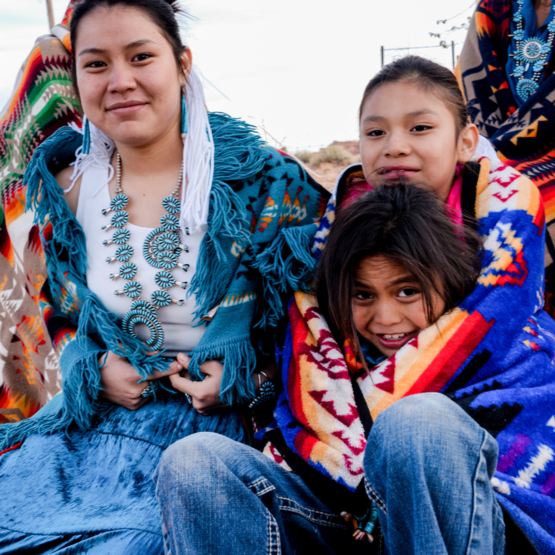
Native American Heritage Month
The celebration of Indigenous cultures began as a week-long celebration in 1986, when President Ronald Reagan proclaimed the week of November 23, 1986, "American Indian Week." Every President since 1995 has issued annual proclamations designating the month of November as the time to celebrate the cultures, accomplishments and contributions of Native American and Alaska Native communities.
Resource: PBS.com

Military Family Month
November was first declared as Military Family Month in 1996. Since then, November has been a time to acknowledge the tremendous sacrifices our military families make. They contend with separation from their families and make adjustments to new living situations and communities. Military Families embody strength, resilience, and courage. Care of military families and children sustains members of our Armed Forces, and strengthens the health, security, and safety of our nation's families and communities.
Resource: National Military Family Association

Sweet Potato Awareness Month
November is National Sweet Potato Awareness Month! Sweet potatoes are packed with nutrients and contain a rich flavor profile, making them ideal to enjoy alone or as part of a dish. They are a great source of vitamin A (in the form of beta-carotene), vitamin B6, vitamin C, potassium and fiber. With Thanksgiving right around the corner, it might be a great time to find a recipe and incorporate sweet potatoes into your holiday meal plan!
Resource: Illinois Extension
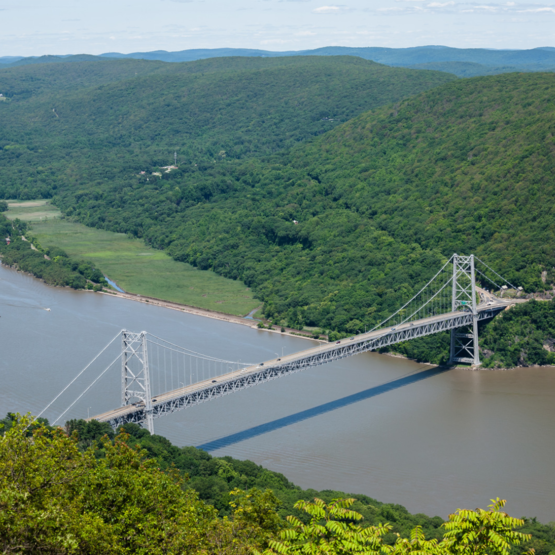
Historic Bridge Awareness Month
Historic Bridge Awareness Month is observed every November (declared in 2006 by HistoricBridges.org) to recognize the engineering, cultural significance and history of bridges across the United States. If you’re interested in taking a look at a couple of bridges not far from Putnam County, drive 20 minutes and travel across the beautiful Bear Mountain Bridge, which was the longest suspension bridge span in the world when it opened in 1924. Once on the other side of the river, travel to Piermont, to see the Bridge Street Historic Bridge. This 1880 structure, built by the King Iron Bridge Company, is recognized as the oldest known surviving bascule bridge (drawbridge design) in the United States. It was completely rehabilitated for pedestrians and stands out as a unique piece of American industrial ironwork.
Resource: HistoricBridges.com

Adopt a Senior Pet Month
Adopt a Senior Pet Month is observed every November. It was founded by the ASPCA and Petfinder.com to raise awareness about older shelter animals and encourage people to give them loving homes. Senior pets have the hardest time getting adopted. Older dogs are still great pets who need homes and there can be benefits to adopting a senior pet.
- Calmer Temperament: Senior pets usually have lower energy levels and a more relaxed demeanor than high-energy puppies or kittens.
- Already Trained: Many older animals already know basic household manners and are house-trained.
- Known Personality: Their permanent size, temperament and health history are already established.
- Instant Gratitude: IOlder pets often settle into a new routine quickly.
Check with your local animal shelter or humane society—such as the Humane Societyor local rescue groups—to see senior pets available for adoption.
Plastic Film: Keep It Out of Your Recycling Bin
from Putnam County Department of Health
Plastic film is everywhere. Grocery and produce bags are made of it; paper towels are shrink-wrapped in it; and bubble wrap and mailer bags are made from it. It should be recycled, but not in your curbside bins. It can only be recycled through designated drop-off locations at certain grocery and retail stores.
The list of plastic film items is long. In addition to produce and bread bags, household shrink wrap, and bubble wrap or mailer bags, other plastic film objects include Ziploc/resealable pouches; deflated shipping air pillows; dry cleaner garment bags, and furniture wrap and dry ice bags. If these are mixed with regular curbside plastic, it gets tangled in the sorting machinery and causes problems at the recycling facilities.
Mail-in recycling services are also available for plastic film, although a fee may be required and acceptable items may vary slightly. Check both retail and mail-in programs for their guidelines to make sure your materials are accepted. A general rule of thumb is that if the plastic stretches when you pull it, it is plastic film and can be accepted. If it tears or is crinkly like a chip or pretzel bag, it goes in the regular trash. Acceptable items must also be clean, dry, and free from food or other residue.
Recycling correctly helps keep valuable materials in use, reduces contamination in the recycling stream, and keeps plastic film from becoming litter or ending up in landfills. It may take a little more time to separate plastic film from your normal household recycling and garbage can, but it makes a big difference when these materials are processed on a larger scale at the recycling facility.
As we look ahead to America Recycles Month in November, it is a good time to remember that recycling isn’t a one-size-fits-all solution. Knowing what can be recycled, where it can be recycled, and how to prepare it properly is an important part of recycling responsibly.
Residents can stay up to date with the state's recycling guidelines and check which materials are accepted at return-to-retail drop-off locations by visiting the New York State Department of Environmental Conservation website.
DEC Urges Caution With Campfires
from New York State Department of Environmental Conservation
The New York State Department of Environmental Conservation (DEC) is urging the public to be extremely careful with all types of outdoor fires to avoid dangerous risks due to dry weather. Fire danger conditions are elevated, and much of the state is abnormally dry. With the fall foliage season in full swing, fire risk will continue to be a concern.
In recent weeks, DEC Forest Rangers have responded to multiple wildfires and encountered causes including unattended or improperly extinguished campfires. People often think a fire has been extinguished, but in dry conditions, hot embers burn into the ground where they can smolder for days or even weeks before being detected as a wildfire.
Due to high fire danger and extended dry conditions, campers, hunters, and other outdoor recreationists are discouraged from having campfires outside of established fire rings or pits that keep the fire contained. If you feel strongly that you must have a campfire, please keep them small and extinguish them completely.
If you encounter a wildfire in the forest, dial 911 to report it and be prepared to give a location of the fire to first responders. If you encounter unattended campfires on DEC lands, contact Forest Ranger Dispatch at 1-833-NYS-RANGERS (1-833-697-7264).
Some helpful wildfire prevention tips:
- Completely extinguish all campfires. Fires should be doused with water and stirred to mix ashes and water until ashes are cool enough to touch.
- Never discard ashes from campfires, charcoal grills, woodstoves, or cigarettes on vegetation or the forest floor.
- Refrain from smoking in areas with flammable vegetation or organic soils. Cigarette butts and ashes should never be discarded in the forest regardless of location. If you carry it in, carry it out!
- Do not drive off an established road or park on top of vegetation. Hot mufflers and catalytic converters can ignite vegetation that touches them.
- Check local regulations for your intended destination for any additional restrictions on fires.
- Never leave a fire unattended. Always be careful with fire.
- And “Remember…Only You Can Prevent Wildfires.”

CLICK HERE and become a part of our efforts
to build our new home at Tilly Foster Farm!
Tidbits
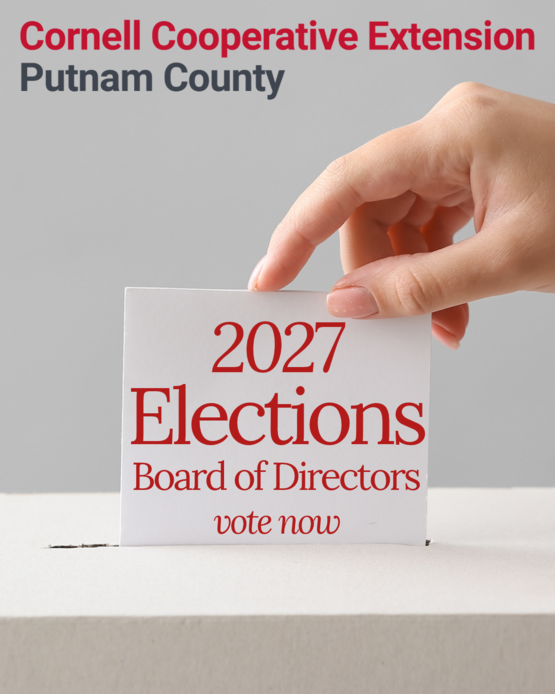
Annual Meeting and 2027 CCE Board of Directors Election
Our Annual Meeting will be held Tuesday, Nov. 10, 2026, at 5 p.m. If you would like to join us via zoom for our Annual Meeting, please register HERE. After registering, you will receive a confirmation email containing information about joining the meeting.
Constitution Approval
The Cornell Cooperative Extension Putnam County Constitution is reviewed every three years, with any proposed amendments presented to the membership for approval. While no changes are being proposed this year, members are still asked to cast their vote to approve or reject the Constitution as presented. You may review the Constitution HERE before casting your vote.
2027 Board of Directors Election
There are three vacancies to be filled on the 2027 Cornell Cooperative Extension Putnam County Board of Directors. Members may vote for the three nominated candidates listed on the ballot or submit write-in candidates of their choosing. Please select no more than three candidates in total. Thank you for taking the time to vote and for your continued support of CCEPC. Your involvement helps ensure that our organization remains responsive to the needs of the communities we serve.
Vote for our 2027 Board of Directors HERE.
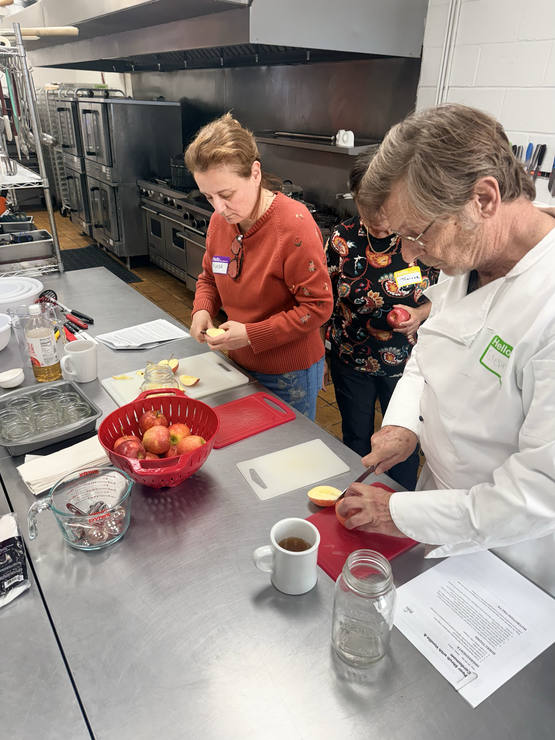
Holiday Syrups & Shrubs: A Sweet (and Zero-Waste) Success!
Last week, our food preservation class gathered at Second Chance Foods to ring in the season the old-fashioned way — by putting up our own holiday flavors. Attendees cooked and canned a delicious cranberry syrup, practiced knife skills while supreming oranges, and preserved citrus in syrup for gifts and desserts. We also learned how to candy orange and grapefruit peels, so nothing from the fruit gets left behind! Along the way, the class covered water-bath canning techniques, the fascinating history of syrups and shrubs (which traces back to Arabic sherbets), and creative ways to use those flavorful rinds at home. Thanks to everyone who joined us — we hope these jars bring a little homemade cheer to your holiday tables!
Help Us Shape the Future of CCE Putnam
At Cornell Cooperative Extension Putnam County, our programs and services are built around the needs of our community. Now we’re asking you to help us decide what comes next.
We invite you to take a few minutes to complete our Community Survey and tell us what matters most to you. Which programs and services do you value? What would you like to see more of? What needs are we not currently meeting?
Take the Community Survey today HERE.
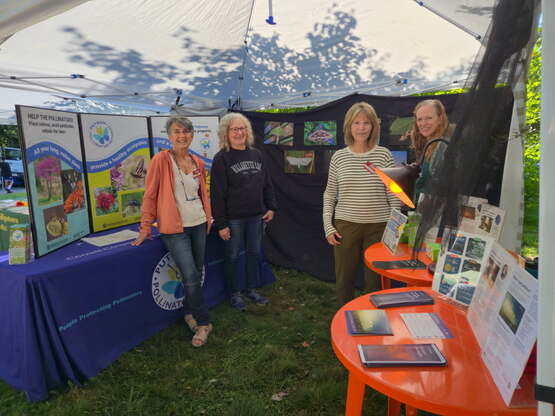
Putnam Pollinator Pathways: Lights Out Program at Cold Spring Farmers’ Market
Putnam Pollinator Pathways Master Gardener Volunteers presented “Lights Out” at the Cold Spring Farmers’ Market last month, sharing a collection of photographs showcasing native moths and highlighting the importance of protecting our dark skies.
Artificial light at night can have detrimental effects on wildlife and plants, disrupting natural behaviors and ecological processes. It can interfere with nesting and habitat use, disorient birds during migration, and disrupt the movement and social behaviors of mammals.
Insects, including moths, are particularly vulnerable to artificial light, which can draw them away from their natural habitats and interfere with pollination, reproduction and other essential behaviors.
Light pollution can also have adverse effects on human health, affecting sleep quality and potentially contributing to the development of some chronic diseases. By reducing unnecessary outdoor lighting, we can help protect wildlife, support healthier ecosystems and promote better health.
Learn more:
Light pollution harms wildlife and ecosystems | DarkSky International
Natural darkness and human well-being | DarkSky International
At a Glance ...

Nature Journaling & Biodiversity Scavenger Hunt
Saturday, Nov. 14 (Rain date: Nov. 15)
9:30 a.m. to 12:30 p.m.
Tilly Foster Farm
100 Route 312, Brewster
Join us at the Restore & Regenerate Forest at Tilly Foster Farm for a hands-on Nature Journaling & Biodiversity Scavenger Hunt as part of a long-term effort to understand and document forest changes over time.
Bring your curiosity and your camera, sketchbook or phone. We’ll explore the forest in search of fall foliage, migrating birds, insects, fungi, trees, tracks and other signs of wildlife — recording what we find along the way.
(Rain date: Nov. 15)
This program is being done in partnership with Soldiers2Scientists.
Fee: $0, $10, $20
Register HERE.

Agritourism Law 101
Monday, Dec. 7
6:30 to 8 p.m.
Weil Preserve
3 Willow Lane, North Salem
Join us for an informative presentation on agritourism law with Jack Hornickel, Esq., staff attorney at the Food & Farm Business Law Clinic. This session will cover key legal considerations for farms engaging in agritourism, including liability, insurance, zoning and regulatory requirements. Whether you are currently hosting on-farm events or exploring new revenue streams, this presentation will help you better understand how to protect your operation and stay compliant.
Jack Hornickel joined the Elisabeth Haub School of Law at Pace University in 2021 as the first staff attorney serving in the Food and Farm Business Law Clinic, which provides transactional legal services to small farms, food and beverage entrepreneurs, and nonprofit organizations seeking to improve the food system. He focuses his services on intergenerational farm succession, land use, conservation and land access. He takes great pride in working with regional farmers, whom he regards as environmental stewards, bold entrepreneurs and pillars of rural community.
Fee: $5, $10, $15

Agritourism Webinar Series
Through Dec. 8
12 to 1 p.m.
Online
Join the Cornell Cooperative Extension Agritourism Program Work Team for a monthly webinar series designed to support both new and established agritourism operators.
This educational series provides practical guidance, timely tools, and real-world strategies to help farms strengthen agritourism operations, manage risk, enhance visitor experiences, and improve long-term business sustainability.
2026 Webinar Schedule:
- Nov. 10: Using Online Platforms
- Dec. 8: Deep Dive into Agritourism Insurance
Webinars made possible through funding from the USDA NIFA Beginning Farmer and Rancher Development Program.
Fee: Free
Register HERE.

Business Development and Marketing Monthly Webinar Series
Through Dec. 15
12 to 1 p.m.
Online
Join Cornell Cooperative Extension for a Business Development and Marketing Zoom series. All sessions will be led by content experts across the Cornell Cooperative Extension system, organizations and businesses which support agricultural operations across New York State. The list of topics and dates are listed below:
- Nov. 17: How to Evaluate Market Opportunities
- Dec. 15: Overview of Market Channels & Requirements for Participation
Fee: Free
Register HERE.

2026 Cut Flower Webinar Series
Through Dec. 16
12 to 1 p.m.
Online
Cornell Cooperative Extension’s Cut Flower Program Work Team invites cut flower growers to join a free monthly webinar series focused on practical, research-based strategies to support successful production. All webinars will be recorded.
- Nov. 18: Growing Gorgeous Dahlias the Regenerative Farmer’s Way
- Dec. 16: High Tunnels: Ranunculus and Anemones.
Fee: Free
Register HERE
Free Webinars Offer Land Use Information
Cornell Cooperative Extension of Broome County invites farmers, landowners, and individuals across New York State of all experience levels to attend a biweekly webinar series running noon to 1 p.m. starting Oct. 6 and ending Dec. 1. The schedule for the series is as follows:
- Nov. 3 - “Designing a Land Lease for You” with Sam Rose (Cornell Small Farms Program)
- Nov. 17 - “Land Conservation Programs Overview” with Upper Susquehanna Coalition, Broome County Soil and Water Conservation District, and Otsego Land Trust
- Dec. 1 - “Accessing State or County Owned Land” with Todd Hyman of Hylight Farms and Wesley Daisley of Ontario County Department of Public Works
Register HERE.
Questions can be directed to Maisie Neuber, Beginning Farmer Educator, mln77@cornell.edu.
Health Department Sponsors Free Rabies Vaccination Clinic
Attention Putnam Residents! Bring your dogs, cats and ferrets to a free rabies vaccination clinic Saturday, Nov. 14, from 10 a.m. to noon. Sponsored by the Putnam County Department of Health, the clinic is being held at Putnam County Veterans Memorial Park (Upper Park), 201 Gipsy Trail Road, Carmel, and is open to all Putnam County residents
Please bring a photo ID as proof of Putnam County residency, as well as proof of prior rabies vaccination. Tags are not acceptable. If you do not have proof of prior rabies vaccination, your pet will receive a one-year rabies vaccine. Pets must be at least 12 weeks old. All dogs must be leashed and controlled. Any dog that may become aggressive must be muzzled. Cats and ferrets must be in carriers, top-loading carriers preferred, no harnesses. All animals must be supervised by an adult. For the comfort and safety of the animals, bringing a minimum number of people is suggested.
For more information and directions, please call the Putnam County Department of Health at 845-808-1390.